
HDMI splitters and switches
HDMI splitters, switches, matrices and extenders — Digitus. One picture on several screens, several sources into one TV, signal across tens of metres.
Products
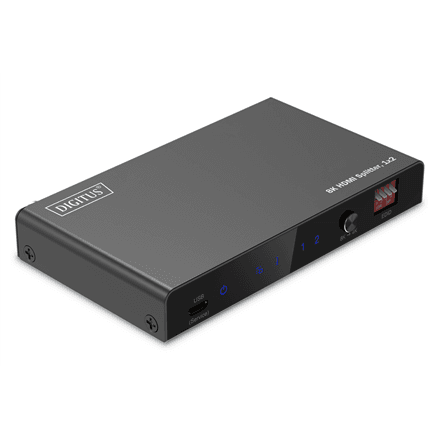
Digitus DS-55339 8K HDMI Splitter, 1x2, Black
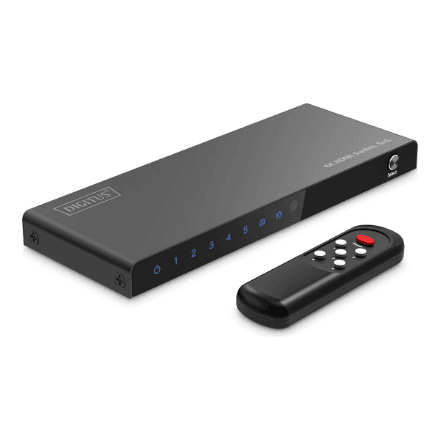
Digitus DS-55334 8K HDMI Switch, 5x1, Black
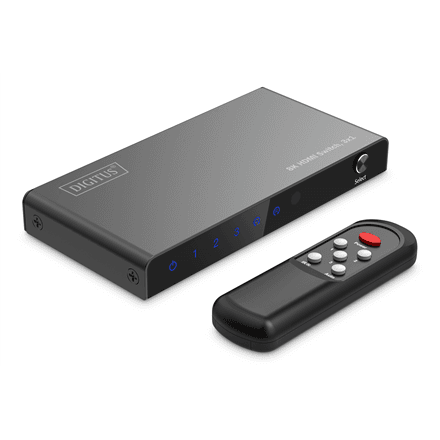
Digitus DS-55333 8K HDMI Switch 3x1, Black
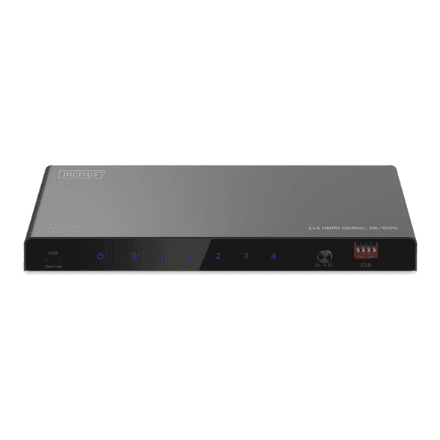
Digitus DS-55340 8K HDMI Splitter, 1x4, Black
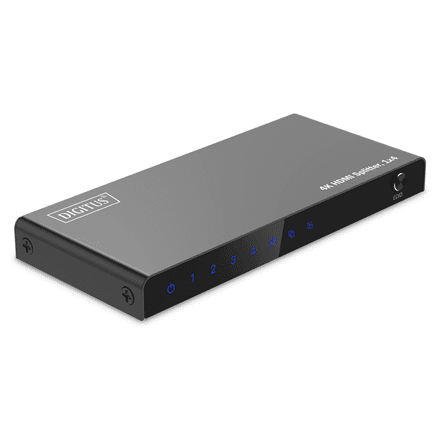
Digitus DS-55337 4K HDMI Splitter 1x4, Black
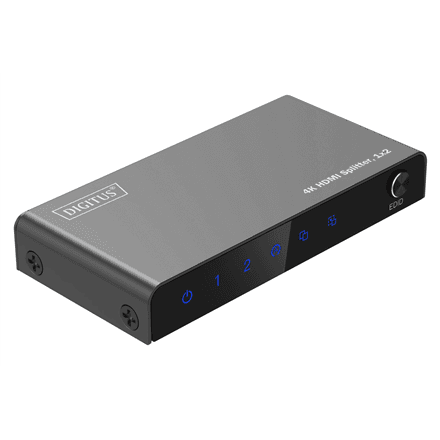
Digitus DS-55336 4K HDMI Splitter 1x2, Black
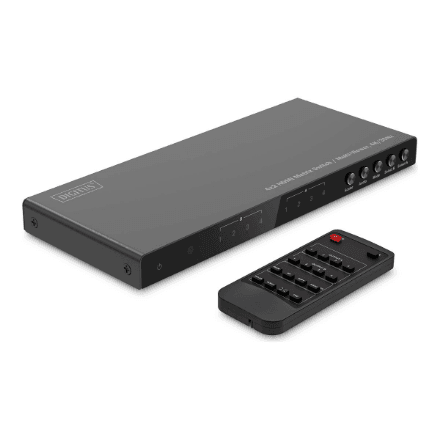
Digitus DS-55345 4x2 HDMI Matrix Switch and Multi-Viewer, 4K 30Hz
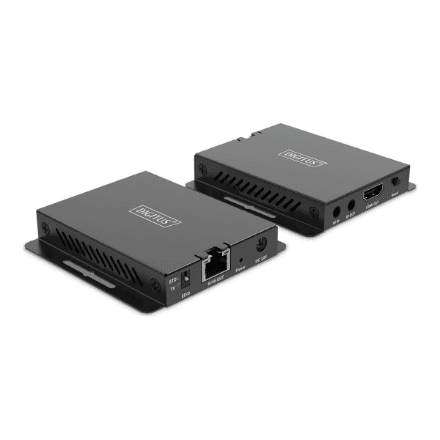
Digitus HDMI extender set, 40 m, 4K at 120 Hz, DS-55342, Black
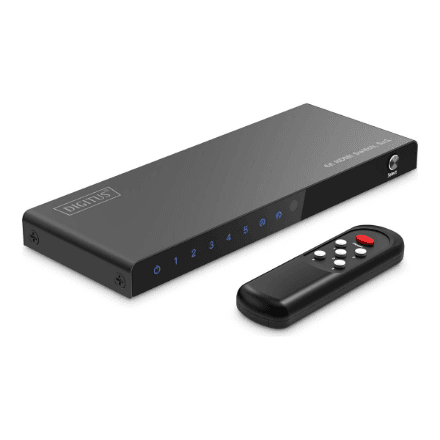
Digitus DS-55331 4K HDMI Switch 3x1, Black
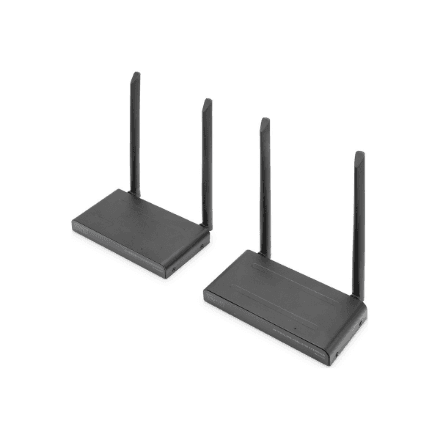
Digitus 4K wireless HDMI KVM extender set, 150 m, DS-55328, Black
Splitter, switch, matrix or extender
Four similar-looking boxes solve four different problems — pick by which side has more devices.
- A splitter takes one source and sends the same picture to several screens: 1×2, 1×4 or 1×8. Used for signage, shops and classrooms.
- A switch does the opposite: several sources (PC, console, set-top box) into one TV, changed by button or remote.
- A matrix combines both — say 4 sources and 2 screens, with each screen choosing what it shows.
- An extender carries the signal further than an HDMI cable can: over network cable or wirelessly, across tens of metres.
What else to check
Look at maximum resolution and refresh rate: 4K/60 Hz is today's baseline, a games console wants 8K or 4K/120 Hz. For an extender, check the cable category and the stated range in metres — that figure assumes good Cat6 cabling.
Related categories
Complete meeting-room kits live under conference systems. See also monitors, projectors and docking stations.
Frequently asked questions
Does a splitter reduce picture quality? No. An active splitter regenerates the signal and every screen gets the same image.
Can a splitter show two different pictures? No — that needs a matrix or a second video output; a splitter always duplicates one image.