TP-LINK

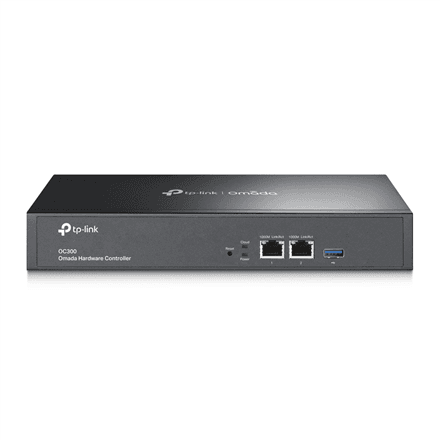
TP-Link Omada OC300 hardware controller, 2 × 1G LAN, USB 3.0

The TP-Link Omada OC300 is a hardware controller for managing an Omada network from one place, without software that has to keep running on a computer. The controller sits on the local network, provides a clear dashboard and makes firmware updates and multi-site management simpler.

  • Network: 2 × 10/100/1000 Mbit/s RJ-45
  • USB: 1 × USB 3.0
  • Management: batch management, multi-site management, remote firmware updates
  • Monitoring: dashboard with network status, usage and traffic distribution
  • PoE: not supported
  • Weight: 1.14 kg

Description

A dedicated controller, not a PC in the corner

A hardware controller is a separate device that keeps network management on site. There is no need for software running permanently on one computer, and no worry about that computer restarting. Because devices are monitored and managed locally, control over the network stays with the company itself, and the manufacturer stresses security and stability in particular.
Batch management and remote firmware updates

When a network has many devices, configuring them one by one takes hours. The OC300 lets you change settings for a whole group and update firmware remotely, so a new version reaches every device without a site visit. That saves the IT technician time and keeps the whole network consistently up to date.

Several sites in one view

Multi-site management means the networks of different offices, stores or buildings can be monitored and managed from the same controller. Each site stays separate, but the overview is in one place, and the administrator does not have to log in to a separate system for every location. Companies with several branch offices benefit most.

Dashboard and connections

The dashboard shows network status, usage and traffic distribution in real time, so the source of a problem is found quickly. The controller has two gigabit RJ-45 ports and one USB 3.0 port. The OC300 does not support PoE, so it needs a separate power source where it is installed. The controller weighs 1.14 kg.

Who this controller is for

Businesses building their network from TP-Link Omada devices that want management in one place; IT technicians who look after several sites and need remote firmware updates; and organisations that prefer to keep network management on their own premises rather than behind an external cloud service. The more Omada devices and locations there are, the more time the controller saves.

Specifications

BrandTP-LINK
Ethernet LAN (RJ-45) ports2
Net weight1.14 kg
Ethernet LAN data rates10/100/1000 Mbit/s
MU-MiMONo
POEno PoE
USB ports quantity1 x USB 3.0
Other featuresBatch management, multi-site management, and remote firmware updates benefit network maintenance. The easy-to-use dashboard makes it easy to see your real-time network status and check network usage and traffic distribution. Locally monitor and manage devices with the ultimate security and stability.
EAN6935364089863

Questions & answers

How many devices can the OC300 manage?

The manufacturer does not specify this. The maximum number of devices is listed on the TP-Link Omada datasheet.

Can the OC300 be powered over PoE?

No, the controller does not support PoE. It needs a separate power source where it is installed.

Can one controller manage several offices?

Yes, the OC300 supports multi-site management: networks at different locations can be monitored and managed from one place.