
Best electric toothbrush 2026: how to choose
Oral-B iO, Philips Sonicare or Xiaomi? We compare models and the research, work out brush-head costs at Estonian prices and help you pick a brush for a child.
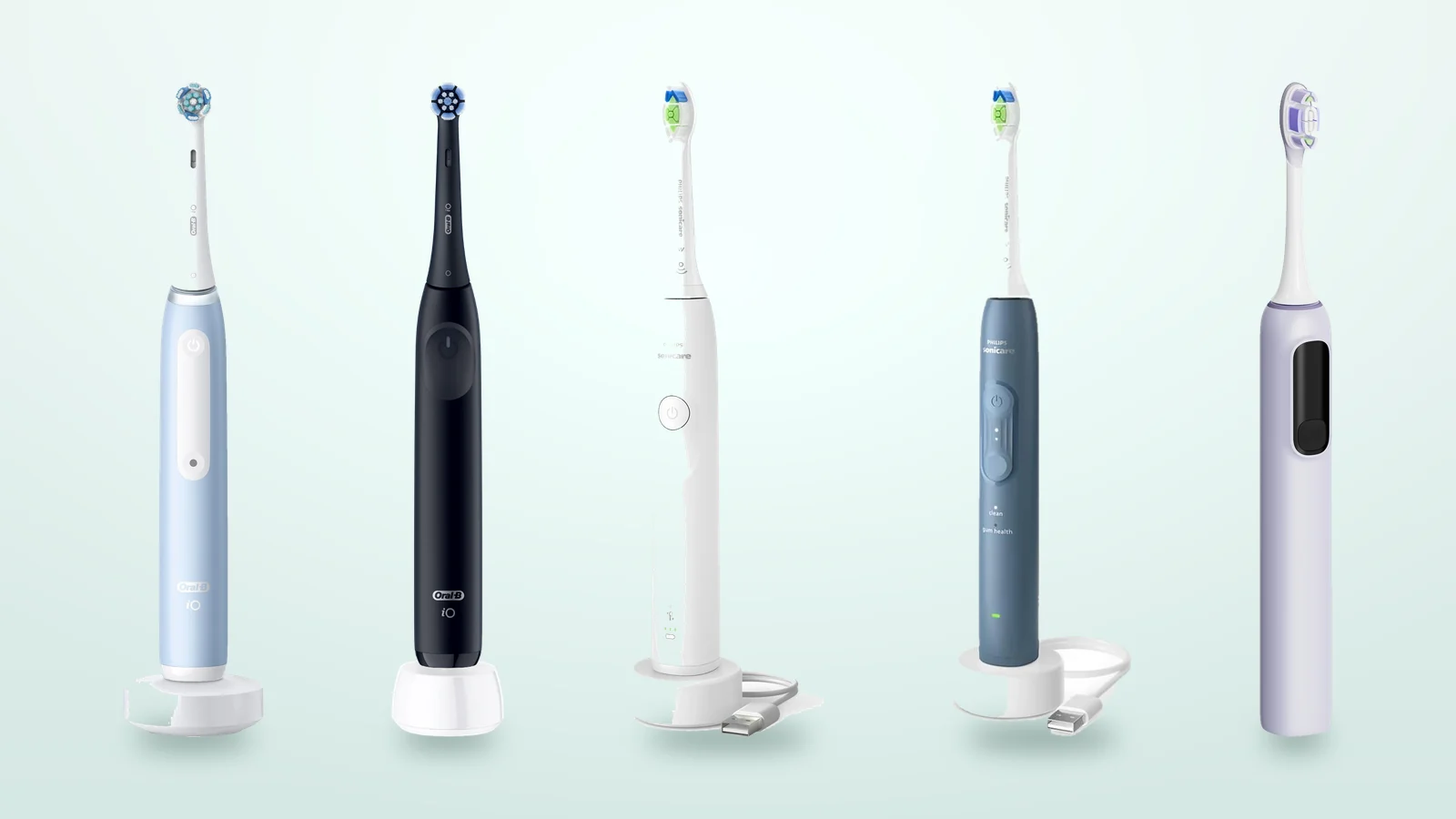
An electric toothbrush is one of the few gadgets you use twice a day — and its real price only shows up a year later, once you have bought four new brush heads. Shelves run from 25 to 450 euros, boxes promise ‘up to 10x more plaque removal’ and the model names change every year.
In this guide we look at what the research actually says about electric toothbrushes, compare Oral-B, Philips Sonicare and Xiaomi models, work out yearly brush-head costs and the three-year total at Estonian prices, and help you choose a brush for a child. Prices and data were checked on 23 September 2026.
Quick answer: which electric toothbrush suits you?
Three questions matter more than the brand: are your gums sensitive, do you want an app, and how much are you prepared to spend on brush heads over the next few years? The table gives a quick answer; each option is explained below.
| Need | Pick | Price in Estonian shops | Why |
|---|---|---|---|
| First electric toothbrush | Oral-B Pro Series 1 or Philips Sonicare 3100 | ≈ €36–44 | Pressure sensor and timer, cheap heads |
| Best value | Oral-B iO2 / iO3 or Philips Sonicare 5300 | ≈ €48–95 | iO magnetic drive or the new Sonicare motor, 2–4 week battery, visible pressure ring on the iO3 |
| Sensitive gums | Philips Sonicare 5300 or 7100 | ≈ €60–151 | Gentler feel; the 7100 adds a Sensitive mode and 3 intensities |
| App and brushing tracking | Oral-B iO5 / iO6 or Philips Sonicare 7100 | ≈ €105–151 | Bluetooth, shows the areas you missed |
| Child aged 3–6 | Oral-B Vitality Pro Kids or Philips Sonicare For Kids | ≈ €24–57 | Small head, 2 modes, music or an app |
| Child aged 6+ | Oral-B iO Kids | ≈ €60–78 | 3 gentle modes, slows down when pressing too hard |
| Travel, longest battery | Xiaomi Oscillation or Oral-B iO2 | ≈ €24–64 | Up to ≈ 180 days (gentle mode) or up to 4 weeks |
Price ranges cover the middle half of offers in Estonian shops (hinnavaatlus.ee, 23 September 2026). The cheapest offer can be lower, but it is often out of stock.
Does an electric toothbrush really clean better?
The short answer is yes — but the difference is smaller than the boxes suggest. The most thorough summary is the Cochrane systematic review (Yaacob et al., 2014), which pooled 56 trials; 51 of them fed a meta-analysis of 4,624 participants. With a powered brush there was 11% less plaque after 1–3 months and 21% less over the longer term, and 6% and 11% less gingivitis respectively. The quality of evidence is moderate.
For long-term effects, the best-known study is Germany’s SHIP cohort from Greifswald (Pitchika et al., 2019), which followed 2,819 adults for 11 years. Powered-brush users had 22% less deepening of gum pockets and lost about 20% fewer teeth. It is an observational study rather than a trial, and people with severe periodontitis saw no benefit.
| Study | What was studied | Result |
|---|---|---|
| Cochrane 2014 | 56 trials, 4,624 participants: powered vs manual brush | Plaque −21%, gingivitis −11% (over 3 months) |
| SHIP Greifswald 2019 | 2,819 adults followed for 11 years | Pocket deepening −22%, tooth loss ≈ −20% |
| Van der Weijden 2004 | Effect of brushing force with an oscillating-rotating brush | High force (≈ 3.5 N) removed less plaque: 56% vs 60% |
| Cochrane 2019 | Interdental cleaning, including water flossers | Water flosser benefit is small and uncertain |
Why an electric brush helps
Much of the benefit comes from discipline rather than the motor. An electric brush times two minutes, prompts you every 30 seconds to move to the next part of your mouth and warns you when you press too hard. People press harder with a manual brush — 1.6 newtons versus 0.9 with a sonic brush in one lab study (Wiegand et al., 2013) — even though more force does not clean better.
The American Dental Association (ADA) and the UK’s NHS say the same thing: used properly, both kinds of brush work. An electric one simply makes good technique easier — especially if you tend to rush, and for children.
Oscillating-rotating or sonic: Oral-B vs Philips Sonicare
Two technologies split the market. Oral-B’s round head rotates back and forth and cleans one tooth at a time; the iO series adds a magnetic drive and micro-vibrations. Philips Sonicare is a sonic brush: an elongated head sweeps side to side at up to 62,000 movements a minute. Xiaomi Oscillation uses a sonic motor with a wider-than-usual sweep.
| Feature | Oral-B (oscillating-rotating) | Philips Sonicare (sonic) | Xiaomi Oscillation |
|---|---|---|---|
| Head shape | Small and round, covers one tooth | Elongated, like a manual brush | Elongated |
| Feel | Stronger, takes some getting used to | Gentler, closer to a manual brush | Adjustable, 3–4 modes |
| Motion | iO: magnetic drive plus micro-vibrations | 31,000 (2100–4100) or 62,000 movements a minute (5300 and up) | 10° sweep, up to 22° in deep-clean mode |
| Pressure sensor | Pro Series 1 and every iO model | From the 3100 up | On the Pro model |
| Battery | iO2 up to 4 weeks, iO3–iO10 ≈ 2 weeks | 14–21 days | Up to ≈ 180 days (gentle mode) |
| One head in Estonian shops | €2.90–4 (Pro), €7.35–9.75 (iO) | €3.80–10 | €4–6.50 |
Which is better? The two most recent meta-analyses (Thomassen et al., 2022; van der Sluijs et al., 2023) found a small advantage for oscillating-rotating brushes in plaque removal. Both have links to Procter & Gamble, which owns Oral-B, and the authors themselves describe the difference as small. In practice it matters more that you like how the brush feels — then you brush for two minutes, not one.
How to decide
- Choose Oral-B ifyou want the most-studied technology, like a small round head that cleans tooth by tooth, and are happy to spend a week or two getting used to it.
- Choose Philips Sonicare ifyour gums are sensitive and you prefer a gentler clean with a familiar head shape.
- Choose Xiaomi ifa low price and a battery that lasts for months on the road matter most, and you do not need an app.
Oral-B models: Vitality Pro, Pro Series 1 and iO2–iO10
Oral-B has two separate worlds: the classic Vitality Pro and Pro Series brushes, and the iO series with its magnetic drive, launched in 2020. Their brush heads are not interchangeable — the single most important detail when you buy.
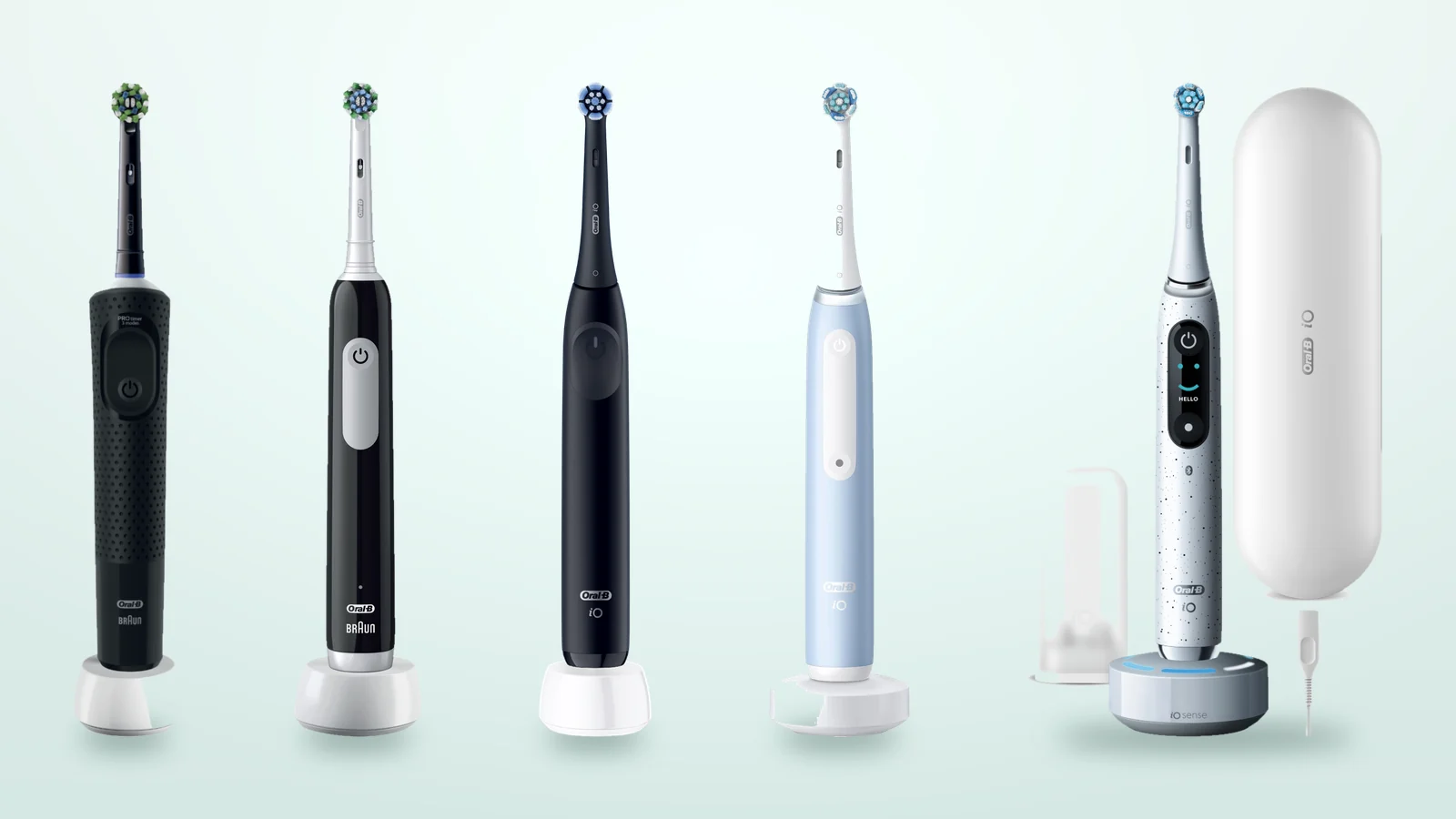
| Model | Modes | Pressure sensor | App and extras | Price in Estonian shops |
|---|---|---|---|---|
| Vitality Pro | 3 | No | — | ≈ €27–34 |
| Pro Series 1 | 3 | Yes, stops the pulsations (no light) | — | ≈ €36–44 |
| iO2 | 3 | Yes, slows down and the button lights red | Battery up to 4 weeks | ≈ €48–64 |
| iO3 | 3 | 360° light ring: too hard, too soft, just right | — | ≈ €71–95 |
| iO5 | 5 | 360° light ring | Bluetooth, 6 zones | ≈ €105–129 |
| iO6 | 5, incl. gum care | 360° light ring | Bluetooth, 6 zones | ≈ €121–141 |
| iO9 | 7 | 360° light ring | Colour display, AI tracks 16 zones, charging travel case | ≈ €195–227 |
| iO10 | 7 | 360° light ring | iO Sense charger shows results without a phone | ≈ €295–360 |
Three models cover most needs. The Pro Series 1 is the cheapest Oral-B with a pressure sensor, and its CrossAction and Precision Clean heads are among the cheapest in Estonia (from ≈ €2.90 each). The iO2 (on sale since early 2025) is the cheapest iO — currently under 60 euros in Estonia — and has the longest battery in the range, up to four weeks, but the pressure warning only lights up in the button. The iO3 adds a visible 360° light ring that shows whether you are pressing too hard or too softly; for many people it is the best iO.
The iO5 and iO6 add Bluetooth and an app that maps six zones of your mouth, and the iO6 also has a gum-care mode. The iO9 and iO10 use AI to track 16 zones and charge on a magnetic charger in about three hours; the iO10’s iO Sense charger shows your brushing results even without a phone. They only make sense if you will actually use the app.
iO or Pro: the heads don’t mix
An iO handle takes iO heads only. CrossAction, Precision Clean, 3D White and Sensitive Clean fit Vitality, Pro and Genius brushes, but not iO. An iO head costs €7.35–9.75 in Estonia, a Pro head in an 8-pack €2.90–4 — at four heads a year that is a difference of €13–27.
- iO Ultimate CleanEveryday cleaning; indicator bristles fade from blue to white when it is time for a new head.
- iO Gentle CareExtra-soft bristles for sensitive gums.
- iO Radiant WhiteFor removing surface stains.
- iO Specialised CleanFor braces, implants and misaligned teeth.
Philips Sonicare models: from the 2100 to DiamondClean 9000
Philips model names change often, but the logic is simple: the higher the number, the more modes and sensors. The key dividing line is the Series 5300: the cheaper 2100–4100 make 31,000 movements a minute, the 5300 and above 62,000. The Series 5300, 5500 and 7100 also carry the Next-Generation Sonicare Technology label.
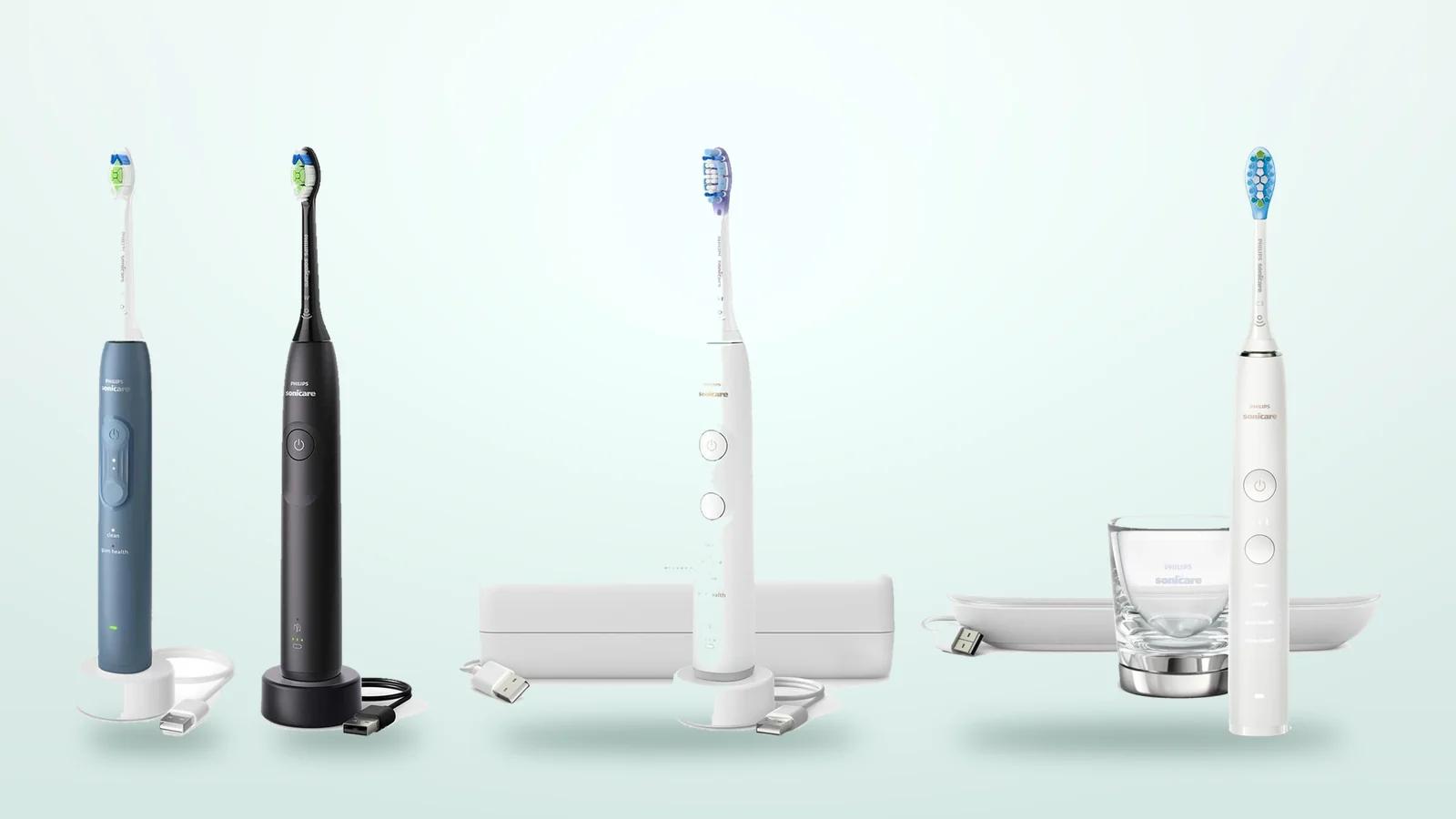
| Series | Modes | Pressure sensor | Battery and app | Price in Estonian shops |
|---|---|---|---|---|
| 2100 (HX3651) | 1 | No | 14 days | ≈ €28–35 |
| 3100 (HX4033) | 1 × 3 intensities | Yes, vibrates | — | ≈ €40–42 |
| 4100 (HX4041) | 4 settings | Yes, vibrates | 21 days | ≈ €45–66 |
| Series 5300 (HX7101, HX7108) | 1 × 2 intensities | Yes, optical | 21 days | ≈ €60–77 |
| Series 5500 (HX7110, HX7111) | 2: clean and white | Yes, optical | 21 days | from ≈ €69 |
| Series 7100 (HX7420) | 4 × 3 intensities | Light ring turns purple | 21 days, app | ≈ €121–151 |
| DiamondClean 9000 (HX9911) | 4 × 3 intensities | Yes, handle vibrates | 14 days, app | ≈ €141–174 |
The ‘up to 3x, 5x, 7x or 10x more plaque removal’ on the box is Philips’ own comparison with a manual brush and rises with the series (2100: 3x, 3100–4100: 5x, 5300–5500: 7x, 7100 and 9000: up to 10x). These are manufacturer studies under set conditions; independent reviews show a more modest gap (see above). The ladder is still a good guide to what the pricier models add.
Philips heads fit almost everything
Sonicare click-on heads (C1 ProResults, C2 Optimal Plaque Defence, C3 Premium Plaque Defence, G2/G3 gum care, W2/W3 whitening, S2 Sensitive, A3 All-in-One) fit every Sonicare handle except Philips One, the kids’ models and older screw-on brushes. The new 2026 series use the same heads, so you can pair a 7100 with cheaper W2 or C1 heads in 8-packs (from ≈ €3.80–4.30 each).
From the 5300 up the handle has BrushSync: a chip in the head tells you when to replace it. Heads without the chip work too, just without the reminder.
What’s new in 2026: AI and a new Sonicare motor
Toothbrushes are heading where phones went: more sensors, apps and artificial intelligence. Three developments that matter to buyers in Estonia:
- Philips DiamondClean 9900 Prestige (next generation)Unveiled on 7 July 2026 in Amsterdam. AI running on the brush itself tracks 12 zones of your mouth and gives real-time feedback on coverage, pressure and scrubbing through a light ring; 8 modes and 3 intensities. It has been on sale in Germany since July at a recommended €449.99 (cheapest offer ≈ €385) and reaches the rest of Europe in the autumn. Philips.ee does not show an Estonian price yet.
- Next-Generation Sonicare TechnologyA re-engineered motor whose magnetic system adapts in real time to how you brush and keeps its power under heavier pressure. In Europe it is in the Series 5300, 5500 and 7100 — from ≈ €60.
- Oral-B iO gets cheaperThe iO2, launched in 2025, now costs under 60 euros in Estonia, and iO Kids brought magnetic-drive iO technology to children aged 6+; a Spider-Man edition of iO Kids followed in summer 2026.
Do you need an AI toothbrush?
Mostly not. The proven benefits — two minutes, even time in each area and moderate pressure — come from a timer and a pressure sensor, which a €40–70 brush already has. App tracking helps people who like to measure their brushing, or whose dentist has asked them to pay more attention to a particular area. Before buying a €450 brush, ask yourself whether you will still open the app in three months’ time.
Xiaomi electric toothbrushes: low price, months of battery
Xiaomi Oscillation brushes are a popular budget choice in Estonia. Despite the name, they do not rotate like an Oral-B; they use a sonic motor with a wider-than-usual sweep: 10° in the standard mode and up to 22° in deep-clean mode.
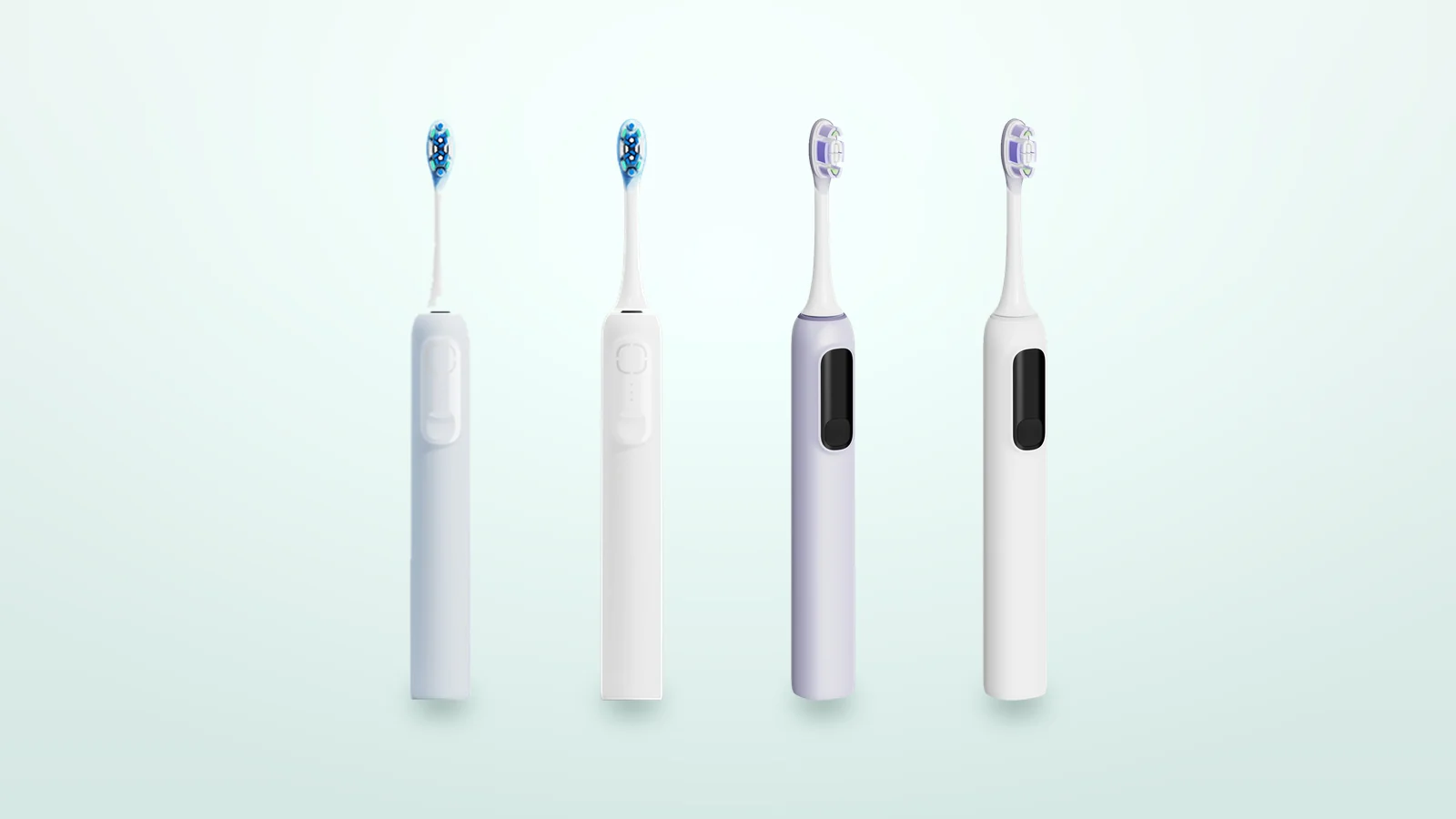
- Xiaomi Oscillation Electric Toothbrush3 modes, battery up to ≈ 180 days in gentle and ≈ 100 days in standard mode, USB-C charging (≈ 6 h), IPX8 water resistance, a light that tracks four zones of your mouth. ≈ €24–34 in Estonian shops.
- Xiaomi Oscillation Electric Toothbrush Pro4 modes, colour display, feedback on six zones and a warning when you press too hard (light plus weaker vibration); 2 heads in the box.
- Xiaomi T302A classic sonic brush with 4 modes, up to 150 days of battery (gentle mode) and wireless charging; currently hard to find in Estonia.
The pluses are clear: price, a battery that lasts for months of travel, and USB-C. The minuses: no app, and the basic model has no pressure sensor. Heads cost ≈ €4–6.50 each in 3-packs, so a year of heads comes to €16–26.
Electric toothbrushes for kids: from what age, and which one?
Manufacturers rate kids’ brushes from age 3. Estonia’s oral-health site suukool.ee says both manual and electric brushes are fine — what matters is that a parent brushes over the child’s teeth at least until school age and checks the result until 6–8.
| Age | Brush | What to watch | Price in Estonian shops |
|---|---|---|---|
| Under 3 | Soft manual brush | A thin smear of toothpaste (≈ 0.1 ml), at least 1,000 ppm fluoride | — |
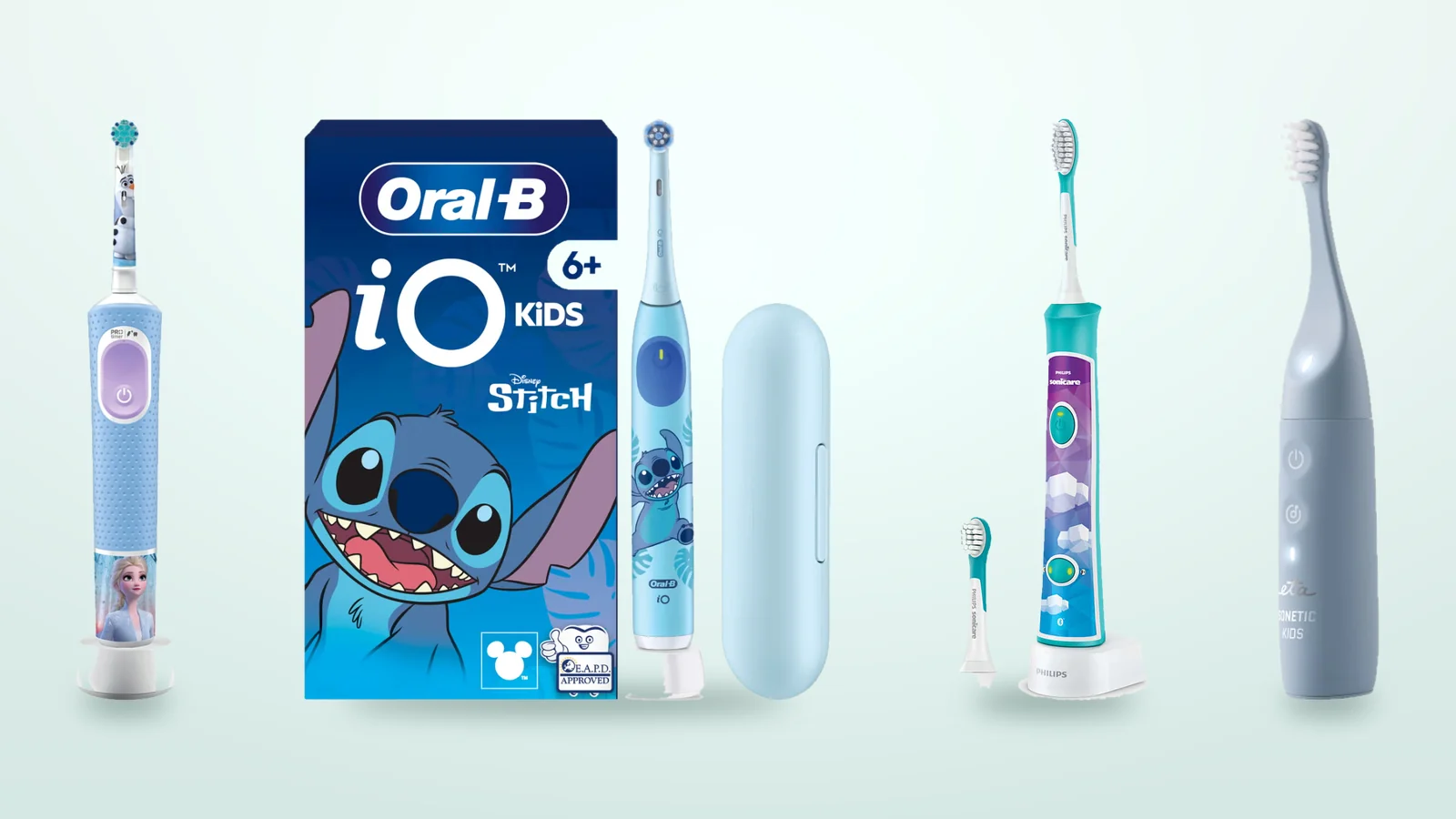
| 3–6 years | Oral-B Vitality Pro Kids or Philips Sonicare For Kids | Small head and gentle mode; a parent brushes over | ≈ €24–57 |
| 6+ years | Oral-B iO Kids | 3 gentle modes, slows down under heavy pressure, battery up to 4 weeks | ≈ €60–78 |
| 7+ years | Philips Sonicare For Kids with a 7+ head | Larger head; keep checking brushing until 8 | ≈ €43–57 |
Philips Sonicare For Kids uses KidTimer to lengthen brushing time gradually over 90 days and plays a tune when it is time to move on; the compact head is for ages 3+ and the standard head for 7+. The Oral-B Vitality Pro Kids has two modes and works with the Disney Magic Timer app. The Oral-B iO Kids (6+) slows down when a child presses too hard and plays a two-minute music timer.
On toothpaste, suukool.ee is clear: under 3, a thin smear (≈ 0.1 ml) with at least 1,000 ppm fluoride; from 3, a pea-sized amount (≈ 0.25 ml), ideally 1,500 ppm. Dental care is free for insured children under 19 at clinics contracted by Tervisekassa, the Estonian Health Insurance Fund.
Brush-head costs: what an electric toothbrush costs per year
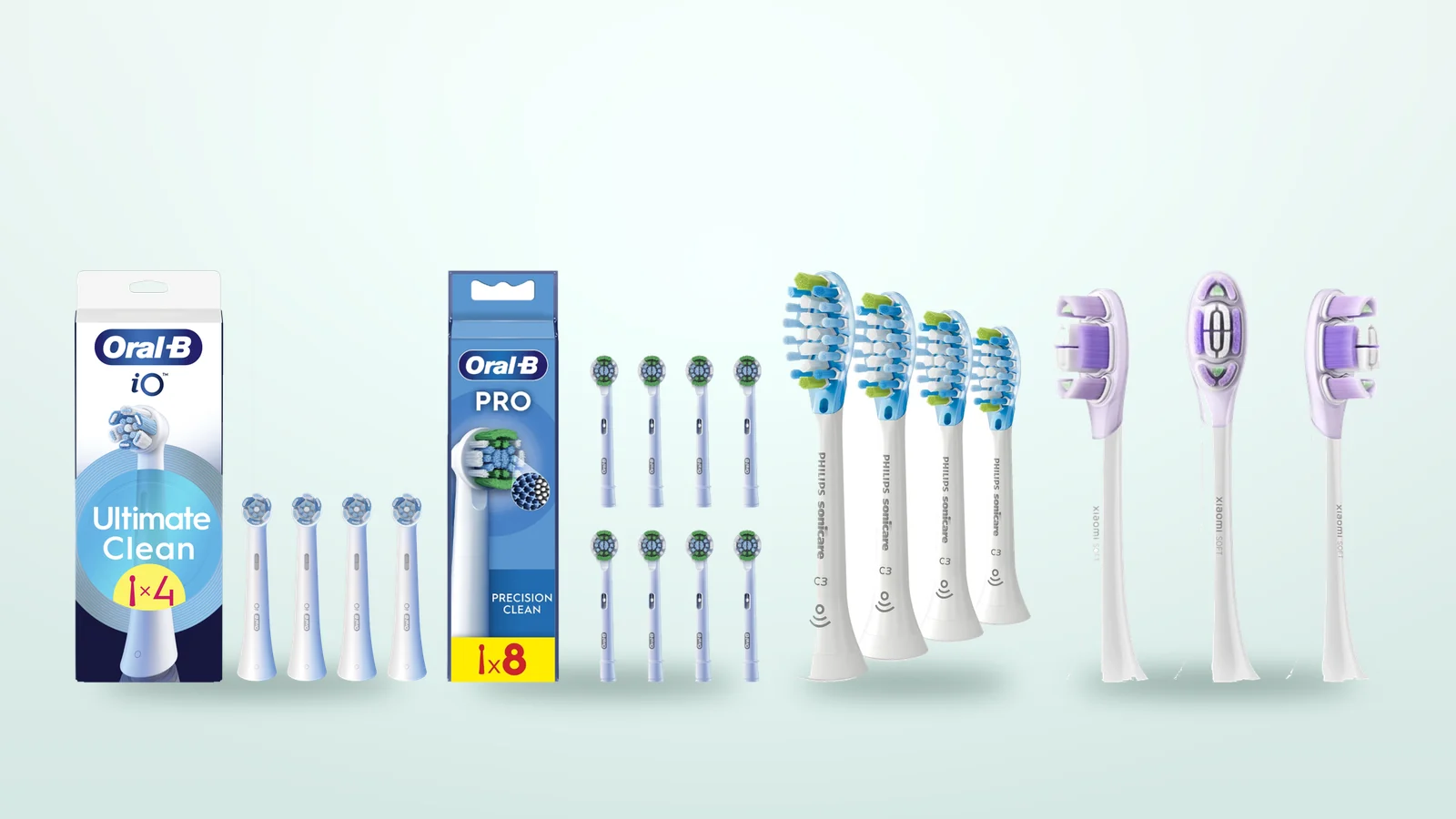
Manufacturers recommend a new head every three months (ADA: every 3–4 months, or sooner if the bristles are worn). Four heads a year means that over three years you often spend more on heads than on the brush itself. The table shows Estonian shop prices on 23 September 2026 (hinnavaatlus.ee), from the cheapest offer to the median.
| Heads | Fit | One head | Per year (4) |
|---|---|---|---|
| Oral-B iO (Ultimate Clean, Gentle Care) | iO only | €7.35–9.75 | €29–39 |
| Oral-B CrossAction (8-pack) | Vitality, Pro, Genius | €3.21–4.04 | €13–16 |
| Oral-B Precision Clean (8-pack) | Vitality, Pro, Genius | €2.91–3.84 | €12–15 |
| Philips C1 ProResults | All click-on Sonicare handles | €3.83–6.01 | €15–24 |
| Philips W2 Optimal White (8-pack) | All click-on Sonicare handles | €4.29–5.04 | €17–20 |
| Philips C3 Premium Plaque Defence (4-pack) | All click-on Sonicare handles | €7.38–9.95 | €30–40 |
| Xiaomi Oscillation (3-pack) | Xiaomi Oscillation and Pro | €3.97–6.53 | €16–26 |
Three-year total cost
Three years take 12 heads, one of which comes in the box. The sum: the brush’s median price in Estonian shops plus 11 heads in the cheapest sensible pack at the median price.
| Brush and heads | Brush | 11 heads | Total over 3 years |
|---|---|---|---|
| Oral-B Pro Series 1 + CrossAction | ≈ €42 | ≈ €44 | ≈ €86 |
| Xiaomi Oscillation + original heads | ≈ €28 | ≈ €68 | ≈ €96 |
| Philips Sonicare 4100 + W2 (8-pack) | ≈ €51 | ≈ €55 | ≈ €106 |
| Philips Sonicare 5300 + W2 (8-pack) | ≈ €69 | ≈ €55 | ≈ €124 |
| Oral-B iO2 + Ultimate Clean | ≈ €57 | ≈ €105 | ≈ €162 |
| Oral-B iO3 + Ultimate Clean | ≈ €78 | ≈ €105 | ≈ €183 |
| Philips Sonicare 7100 + W2 (8-pack) | ≈ €128 | ≈ €55 | ≈ €183 |
The takeaway: the iO2 costs less than half as much as a Philips 7100 to buy, but over three years the gap shrinks from 71 to 21 euros — iO heads are the priciest on the market. Oral-B’s Pro range and Xiaomi have the lowest total cost. Six- and eight-packs, and buying heads during sales, help you save.
Compatible (non-original) heads are cheaper, but bristle quality and fit vary, and Philips BrushSync does not recognise them. If you use them, replace them just as often — worn bristles clean less well.
What to check before you buy
- Pressure sensorThe most useful extra: pressing hard does not clean better and can irritate your gums. Available from the Oral-B Pro Series 1 and Philips 3100 up.
- Timer with 30-second promptsTwo minutes split across four areas of your mouth — almost every electric brush has it.
- Battery and chargingUsually 2–4 weeks. For travel, a USB-charging travel case (iO9, iO10, DiamondClean 9000) or Xiaomi’s USB-C charging helps.
- Cost of headsBudget for four heads a year. iO heads cost 2–3 times as much as Oral-B Pro heads.
- ModesFor sensitive gums, look for a Sensitive mode or adjustable intensity. More than 3–4 modes is mostly about convenience, not health.
- Twin packsFor a couple or a family, a two-brush pack (for example Oral-B iO2, Pro Series 1 or Philips 5500) is often cheaper per brush.
- WarrantyOur electric toothbrushes come with a 24-month warranty.
Water flosser: an add-on, not a replacement
A water flosser (oral irrigator) flushes between the teeth with a jet of water. According to the 2019 Cochrane review (35 trials, 3,929 adults), used alongside brushing it may reduce gingivitis at one month, but the certainty of evidence is very low and no benefit was found for plaque; interdental brushes may even beat floss. A water flosser is handy if you struggle with floss, but it does not replace brushing.
When to buy
Toothbrushes are frequent sale items and prices move even in an ordinary week: the same iO2 currently costs €43–64 in Estonian shops. If you are not in a hurry, the biggest sales period of the year is Black Friday week (Black Friday is on 27 November 2026) and the Christmas season that follows — a good time to buy one as a gift, too.
Verdict: which electric toothbrush to buy
Choose Oral-B if…
- you want the most-studied technology
- you like a small round head that cleans tooth by tooth
- you want cheap heads (Pro range) or a long battery (iO2)
- you are buying for a child — there are models from age 3 and age 6
Choose Philips Sonicare if…
- your gums are sensitive and you prefer a gentler feel
- you want a head shaped like a manual brush
- you want your heads to fit your next brush too
- you want an app and three intensities (Series 7100)
For most people in 2026, the right brush costs €40–80: an Oral-B iO2 or iO3, a Philips Sonicare 5300 or, on a tighter budget, the Oral-B Pro Series 1. All have a timer and a pressure sensor — the two features that genuinely help. Pricier models add an app, modes and convenience rather than a noticeably better clean.
Do the brush-head maths before you buy: over three years the heads can cost more than the brush. For a child aged 3–6, pick a kids’ model with a small head and brush over their teeth yourself; for 6+, the Oral-B iO Kids is a good fit. If you want the very latest, watch for the Philips DiamondClean 9900 Prestige to reach Estonia — but AI is no substitute for two minutes, twice a day.
Electric toothbrushes in stock
Oral-B, Philips Sonicare, Xiaomi and ETA brushes for adults and children. We ship toothbrushes to parcel lockers.
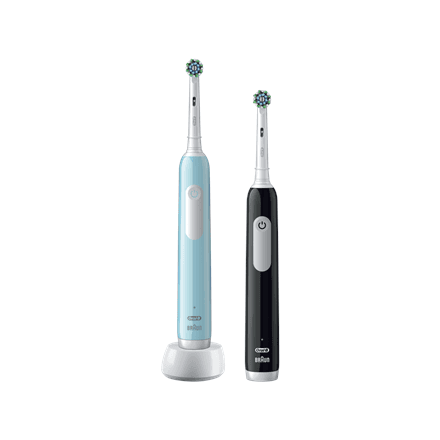
Oral-B Pro Series 1 electric toothbrush duo pack, 2 brushes
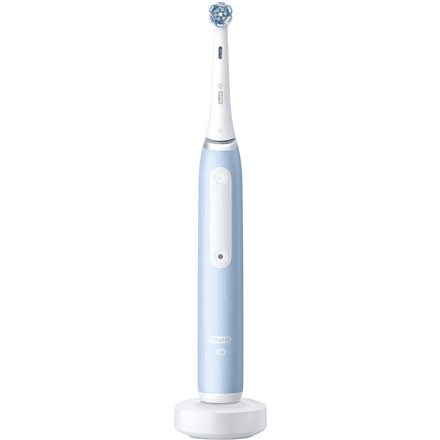
Oral-B iO Series 3 electric toothbrush with pressure sensor, blue
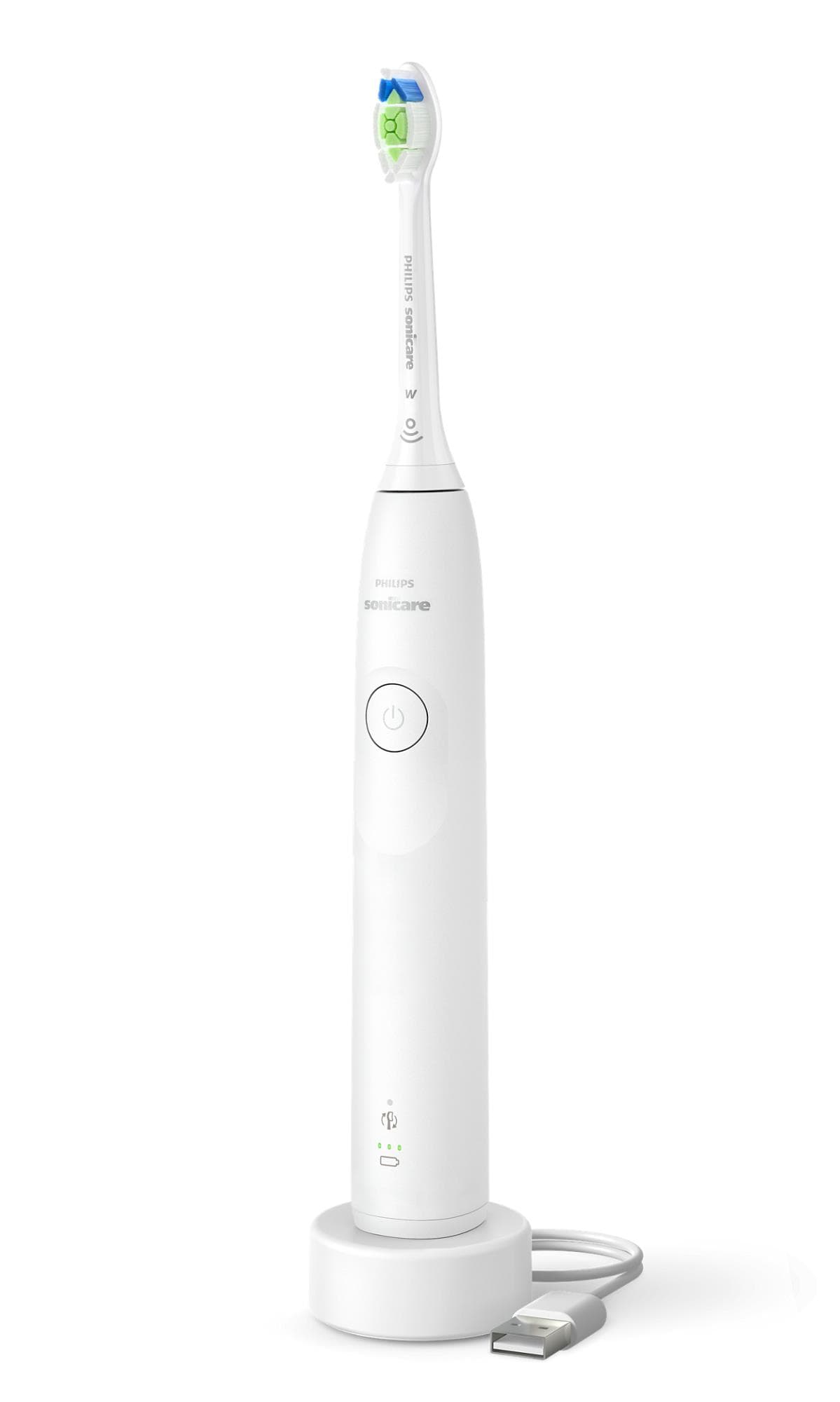
Philips HX7108/01 White Electric Toothbrush
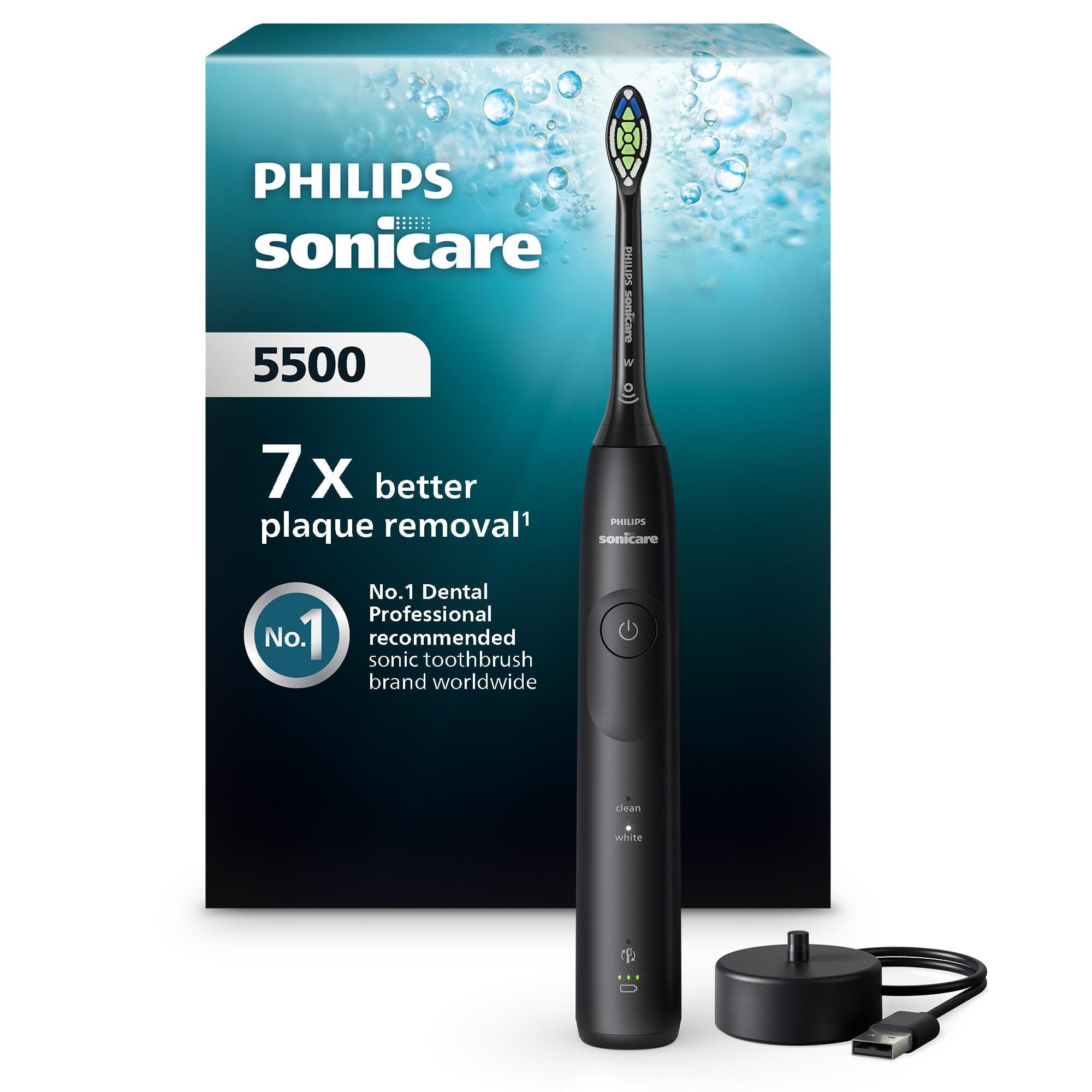
Philips HX7111/01 Black Electric Toothbrush
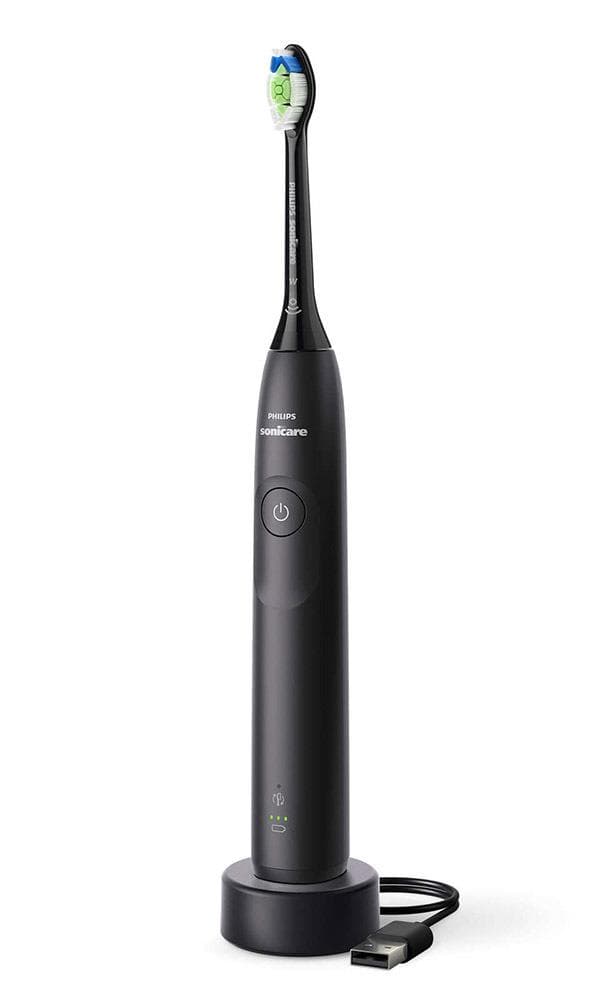
Philips HX7101/01 Black Electric Toothbrush
Philips Sonicare Series 5500 sonic toothbrush, 2 modes, white
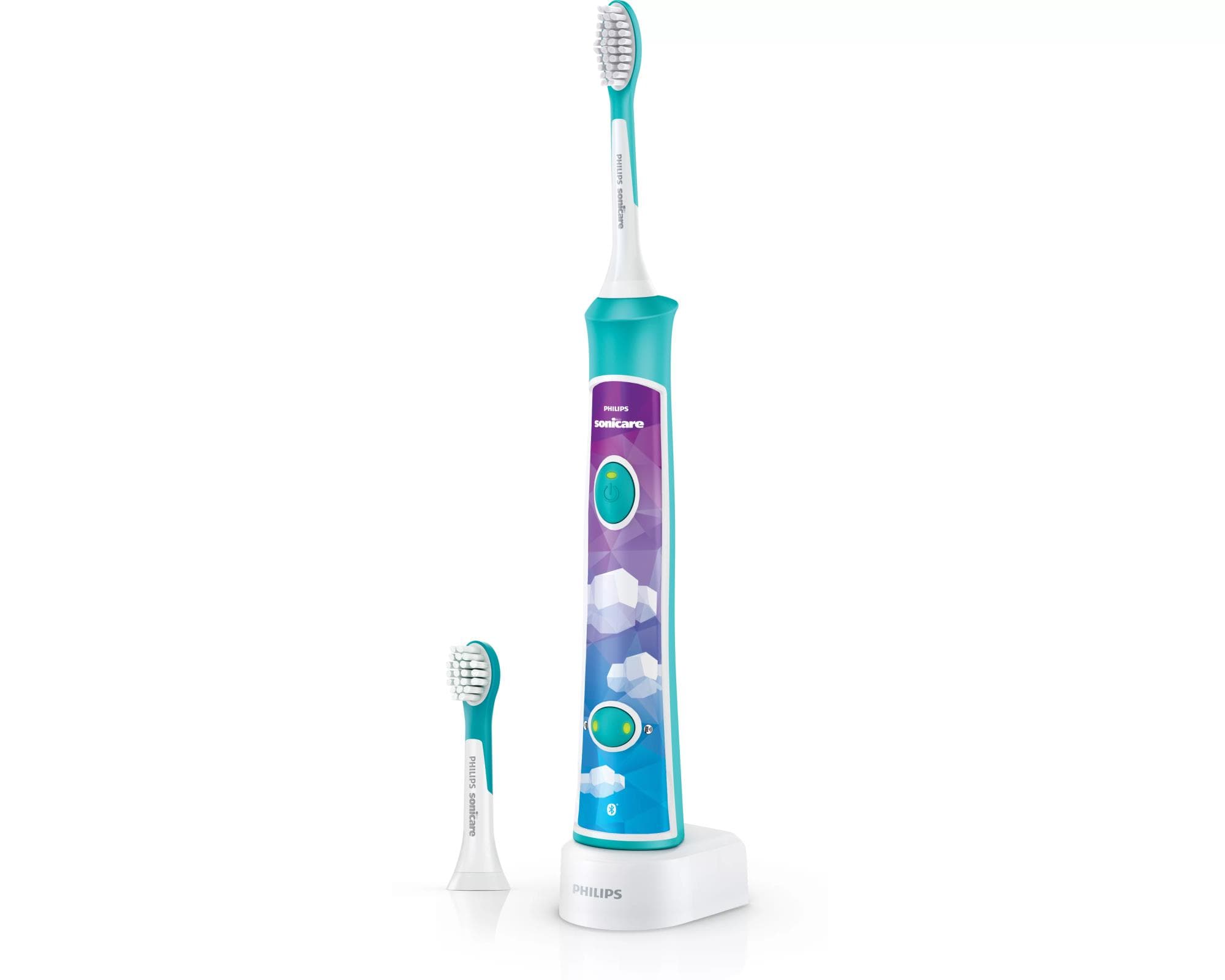
Philips HX6322/04 sonic toothbrush, blue, 2 heads
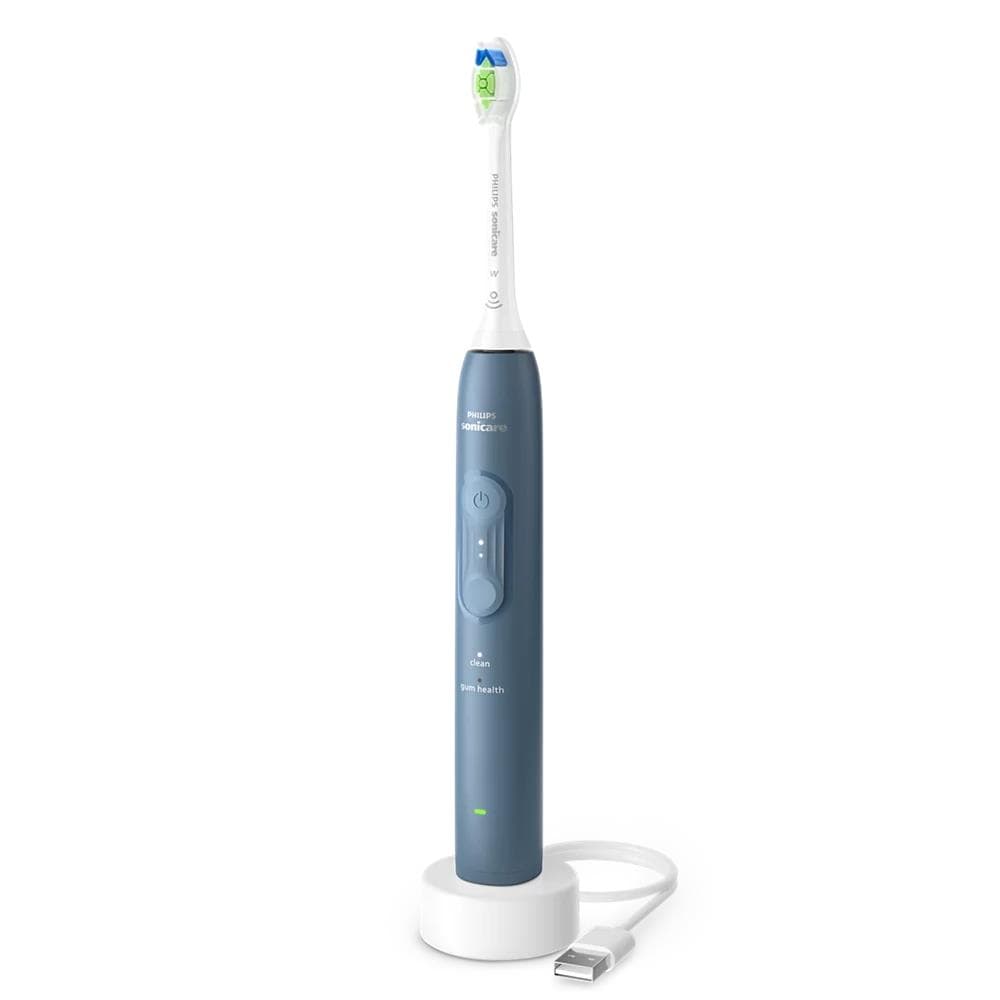
Philips HX4041/48 Electric Toothbrush Blue
Electric toothbrush FAQ
What is the best electric toothbrush in 2026?
For most people, a brush with a timer and pressure sensor at €40–80: the Oral-B iO2 or iO3, the Philips Sonicare 5300 or, for less, the Oral-B Pro Series 1. With sensitive gums Philips Sonicare is often the better fit; for children aged 3–6, the Oral-B Vitality Pro Kids or Sonicare For Kids, and for 6+, the Oral-B iO Kids.
Is an electric toothbrush better than a manual one?
Yes, moderately. In the Cochrane review (56 trials), powered brushes left 21% less plaque and 11% less gingivitis over three months or more. In the 11-year Greifswald study, powered-brush users lost about 20% fewer teeth. Much of the benefit comes from the timer and the right pressure.
Which is better, Oral-B or Philips Sonicare?
Meta-analyses have found a small plaque-removal advantage for Oral-B’s oscillating-rotating technology, but the difference is small and some of the research is linked to Oral-B’s owner. Philips Sonicare feels gentler and often suits sensitive gums better. Go by feel — the brush you enjoy using cleans better.
Do Oral-B iO heads fit other Oral-B brushes?
No. iO heads fit iO handles only. CrossAction, Precision Clean, Sensitive Clean and other Pro heads fit Vitality, Pro and Genius brushes, but not iO.
How often should I replace the brush head?
Every three months, or sooner if the bristles are worn. Many heads have indicator bristles that fade, and Philips handles with BrushSync remind you themselves. That is four heads a year, or ≈ €12–40 depending on the system.
From what age can a child use an electric toothbrush?
Manufacturers rate kids’ models (Oral-B Vitality Pro Kids, Philips Sonicare For Kids) from age 3, and the Oral-B iO Kids is designed for ages 6+. Suukool.ee advises parents to brush over their child’s teeth at least until school age.
Is the Xiaomi electric toothbrush any good?
For the price, yes: the Xiaomi Oscillation costs ≈ €24–34 in Estonian shops, lasts up to ≈ 180 days in gentle mode and its heads are cheap. There is no app and the basic model has no pressure sensor; the Pro model adds a colour display and a pressure warning.
Can an electric toothbrush damage enamel or gums?
Not if used properly. Too much pressure is the real risk — it does not clean better and can irritate your gums. Choose a brush with a pressure sensor and a soft head, and let the brush do the work instead of scrubbing as you would with a manual brush.
How long does an electric toothbrush battery last?
Usually 2–3 weeks brushing twice a day: Philips Sonicare 14–21 days, Oral-B iO about 2 weeks and the iO2 up to 4 weeks. The Xiaomi Oscillation lasts longest — up to ≈ 180 days in gentle mode.
Does Tervisekassa cover dental care in Estonia?
Dental care is free for insured children under 19 at clinics contracted by Tervisekassa. The adult dental benefit in 2026 is €60 a year (the patient pays 50%); some groups — for example pregnant women, pensioners and people over 63 — get €105 with a 12.5% co-payment.
Complete your oral-care kit
Alongside the brush, pick up spare heads (6- and 8-packs are cheapest per head), a water flosser for between the teeth if you need one, and a dedicated kids’ brush for your child. All electric toothbrushes are in one place, with filters for brand, technology and age group.
Browse electric toothbrushesⓘ This article is not a substitute for advice from your dentist. Prices: Estonian shop offers from hinnavaatlus.ee on 23 September 2026 (middle half of offers; for heads, cheapest offer to median); DiamondClean 9900 Prestige — Philips Germany and geizhals.de. Studies: Yaacob et al. (Cochrane, 2014), Pitchika et al. (J Clin Periodontol, 2019), Thomassen et al. (2022), van der Sluijs et al. (2023), Van der Weijden et al. (2004), Wiegand et al. (2013), Worthington et al. (Cochrane, 2019). Guidance: ADA, NHS, suukool.ee, Tervisekassa. Model data from the manufacturers (Oral-B, Philips, Xiaomi). Photos: manufacturers’ product images (Oral-B, Philips, Xiaomi, ETA).