
Best Garmin watch 2026: Fenix, Forerunner or Venu
How to choose a Garmin watch: what separates the series, Fenix 8 vs fenix 9, the best Garmin for running and for everyday wear, battery life and price levels in Estonia.
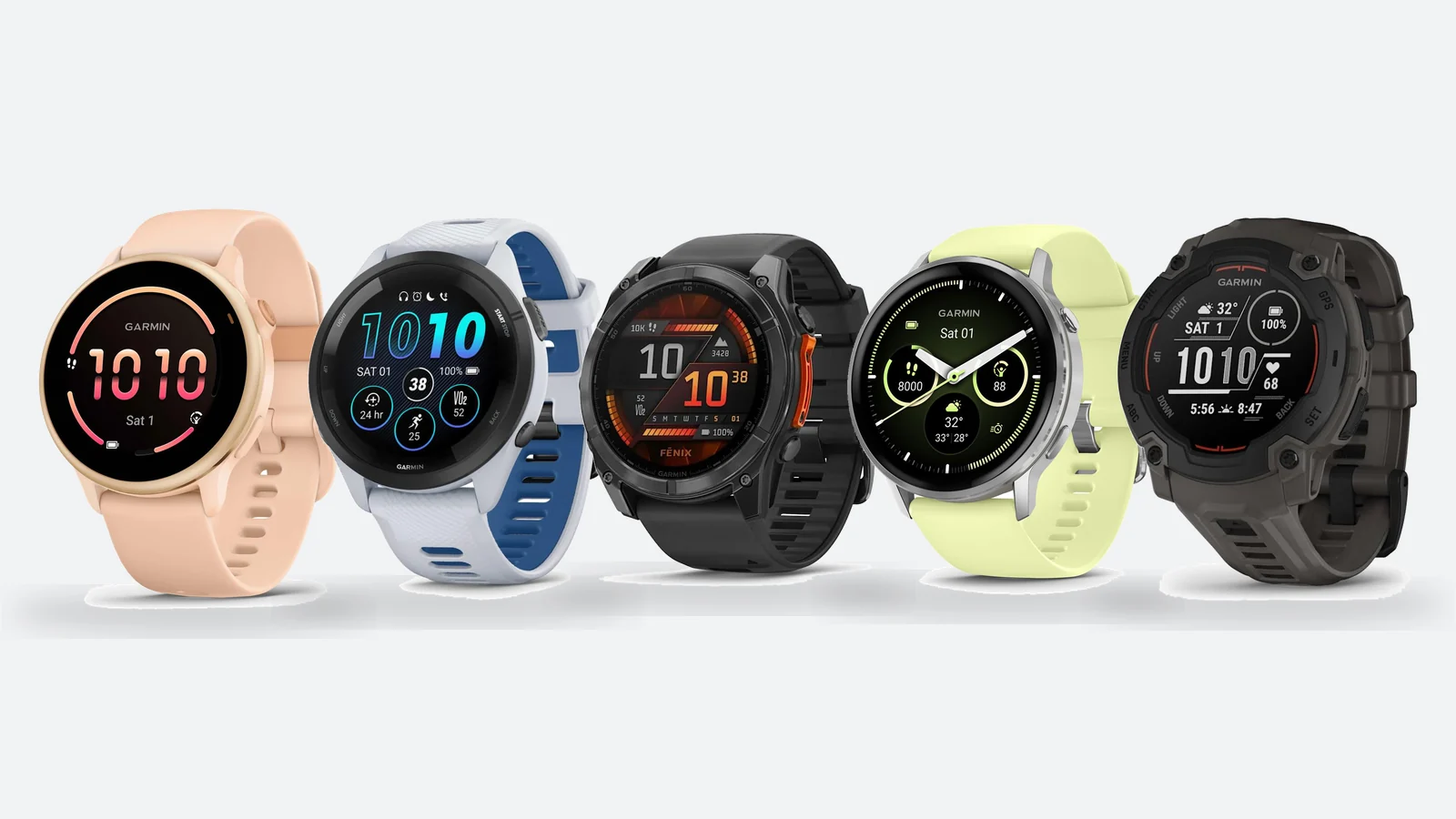
Garmin sells dozens of watch models at once, and the names tell a buyer very little: Fenix, Forerunner, Venu, Vivoactive, Instinct. The choice is simpler than it looks. Every Garmin watch tracks heart rate, sleep, stress and Body Battery energy, and records workouts with GPS. The series differ in three things: how long the battery lasts, whether the watch has maps, and how tough the case is.
The fenix 9 went on sale in August 2026 and shifted prices: the previous flagship, the Fenix 8, now costs 150–200 € less than the new model in Estonian shops, while the features most people care about are the same. This guide goes through the series one by one, compares models in tables and says plainly which watch we recommend to whom. Price levels are for Estonian shops in November 2026.
Quick pick: which Garmin watch suits whom
Start with what you will actually do with the watch. If training means the gym, walking and a couple of runs a week, you do not need the Fenix's maps and 29-day battery — the same heart-rate sensor and sleep tracking come at a third of the price. If you are preparing for a marathon or go on multi-day hikes, the more expensive model earns its keep.
| For whom | Model | Display and case | Battery as a smartwatch | Price level in Estonia |
|---|---|---|---|---|
| First Garmin: workouts, sleep, steps | Vivoactive 5 | 1.2″ AMOLED, 42 mm | up to 11 days | about 200–210 € |
| The same, but newer with more running features | Vivoactive 6 | 1.2″ AMOLED, 42 mm | up to 11 days | about 275–280 € |
| A runner who trains to a plan | Forerunner 265 | 1.3″ AMOLED, 46 mm | up to 13 days | about 360–380 € |
| Everyday smartwatch with calls and health metrics | Venu 3 / Venu 3S | 1.4″ / 1.2″ AMOLED, 45 / 41 mm | up to 14 / 10 days | about 360–380 € |
| Marathon, triathlon, maps on the wrist | Forerunner 965 | 1.4″ AMOLED, 47 mm, titanium bezel | up to 23 days | about 525–545 € |
| Hiking, diving, every sport | Fenix 8 | 1.3–1.4″ AMOLED, 43 / 47 / 51 mm | up to 10 / 16 / 29 days | about 820–945 € |
| The newest flagship | fenix 9 | AMOLED, 43 / 47 / 51 mm, sapphire | up to 10 / 16 / 29 days | about 970–1,140 € |
| A tough watch for work and the woods | Instinct E | monochrome MIP display, 45 mm | up to 16 days | about 210 € |
The price level is the median of Estonian shop offers on hinnavaatlus.ee on 11 November 2026, rounded. Prices move during sales — the current price is always on the product page.
Garmin series: how they differ
Garmin does not make one watch at several price points; it makes a separate series for each kind of use. Health and sleep tracking are similar across all of them; the differences are in training analysis, navigation and materials.
- VivoactiveThe most affordable Garmin with an AMOLED display. GPS, more than 30 sport modes, sleep and Body Battery. No maps, no altimeter, no calls from the wrist.
- VenuAn everyday smartwatch: speaker and microphone for calls, a metal bezel, more detailed sleep and health tracking. Fine for sport, but only the Venu X1 has maps.
- ForerunnerA running and triathlon watch: light polymer case, five physical buttons, training readiness and race-time predictions. The 965 and 970 add colour maps.
- FenixThe flagship. Every Forerunner training feature, a metal bezel, maps, a flashlight, a dive rating and the longest battery life. Heavier and more expensive.
- InstinctA rugged watch built to the MIL-STD-810 military standard. A simpler display, very long battery life, 10 ATM water resistance. No maps.
Fenix 8 or fenix 9: is the new model worth the extra
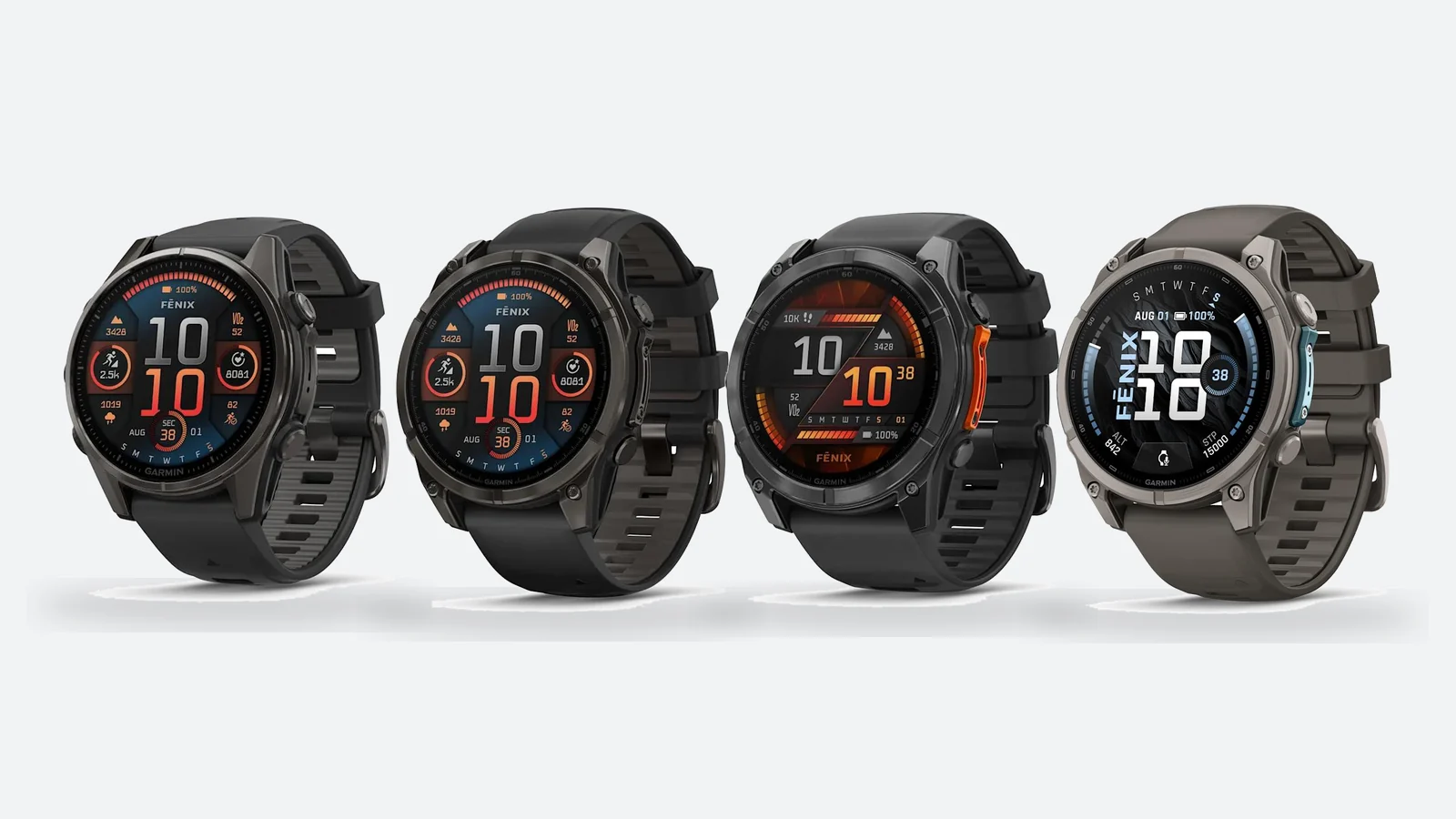
Garmin announced the fenix 9 and fenix 9 Pro on 25 August 2026. The list price of the standard fenix 9 is 999.99 € (43 and 47 mm) and 1,099.99 € (51 mm). Three things are new: the AMOLED display is, according to Garmin, twice as bright as the Fenix 8's, storage has grown from 32 GB to 64 GB, and every version now has a sapphire lens. Battery life is unchanged.
| Fenix 8 | fenix 9 | |
|---|---|---|
| Announced | August 2024 | 25 August 2026 |
| Sizes | 43 / 47 / 51 mm (AMOLED), 47 / 51 mm (Solar) | 43 / 47 / 51 mm |
| Display | AMOLED 1.3–1.4″ or solar-charging MIP | AMOLED, twice as bright |
| Lens | Gorilla Glass or sapphire (Sapphire versions) | sapphire on all |
| Storage | 32 GB | 64 GB |
| Battery as a smartwatch | up to 10 / 16 / 29 days | up to 10 / 16 / 29 days |
| Maps, flashlight, speaker and microphone | yes | yes |
| Dive rating | 40 m | 40 m |
| Price level in Estonia | about 820–945 € | about 970–1,140 € |
Our advice: unless you wear the watch in bright sun every day or load it with maps of the whole of Europe, buy the Fenix 8. The training features, GPS accuracy and battery are the same, and the 150–200 € difference pays for a spare strap and a screen protector with change left over. The fenix 9 makes sense if you plan to wear the watch for five or six years and want software updates for longest.
The fenix 9 Pro is a class of its own: a full titanium case, a 3,000-nit display and optional inReach satellite communication. Solar-charging Pro versions last up to 57 days, according to Garmin. It is a watch for people who go into the mountains and to places with no mobile coverage.
Which Fenix size to choose
Size sets the battery: 43 mm lasts up to 10 days, 47 mm up to 16 and 51 mm up to 29. With the always-on display the time is roughly halved. The 43 mm suits a slim wrist and the 47 mm suits most people; the 51 mm is a large, heavy watch that pays off on multi-day trips. Strap widths are 20, 22 and 26 mm respectively (QuickFit).
Forerunner 265, 965 or 970: the best Garmin for runners
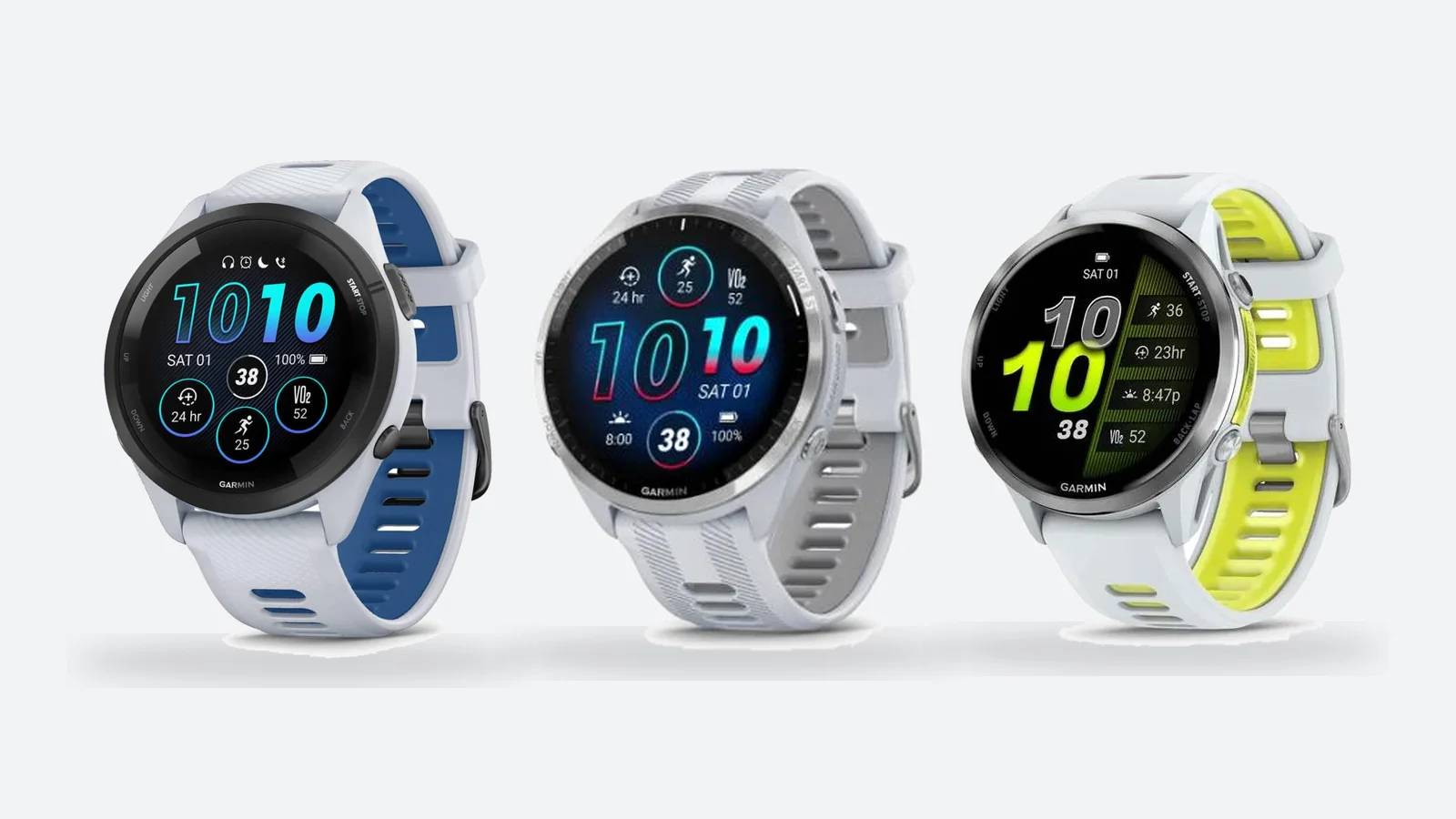
The Forerunner is built for running: the watch is light, does not bounce on the wrist, and the buttons work with wet fingers or gloves. All three models have multi-band GPS, a training readiness score, HRV status and daily suggested workouts that adapt to your recovery.
| Forerunner 265 | Forerunner 965 | Forerunner 970 | |
|---|---|---|---|
| Display | 1.3″ AMOLED | 1.4″ AMOLED | 1.4″ AMOLED, sapphire |
| Battery as a smartwatch | up to 13 days | up to 23 days | up to 15 days |
| Maps | no (breadcrumb route only) | yes | yes |
| Storage | 8 GB | 32 GB | 32 GB |
| Flashlight, speaker and microphone | no | no | yes |
| Weight | 47 g | 53 g | 56 g |
| Price level in Estonia | about 360–380 € | about 525–545 € | about 700 € |
The Forerunner 265 is enough for most runners: from 5K to the marathon it gives the same training analysis as the dearer models. The Forerunner 965 adds maps and almost twice the battery life — choose it if you run trails, do triathlon or do not want to charge a watch every week. The Forerunner 970 is the newest: a sapphire lens, a flashlight for the dark months and calls from the wrist, but the brighter display uses more battery and the price is nearly 170 € above the 965.
Venu and Vivoactive: a Garmin for every day
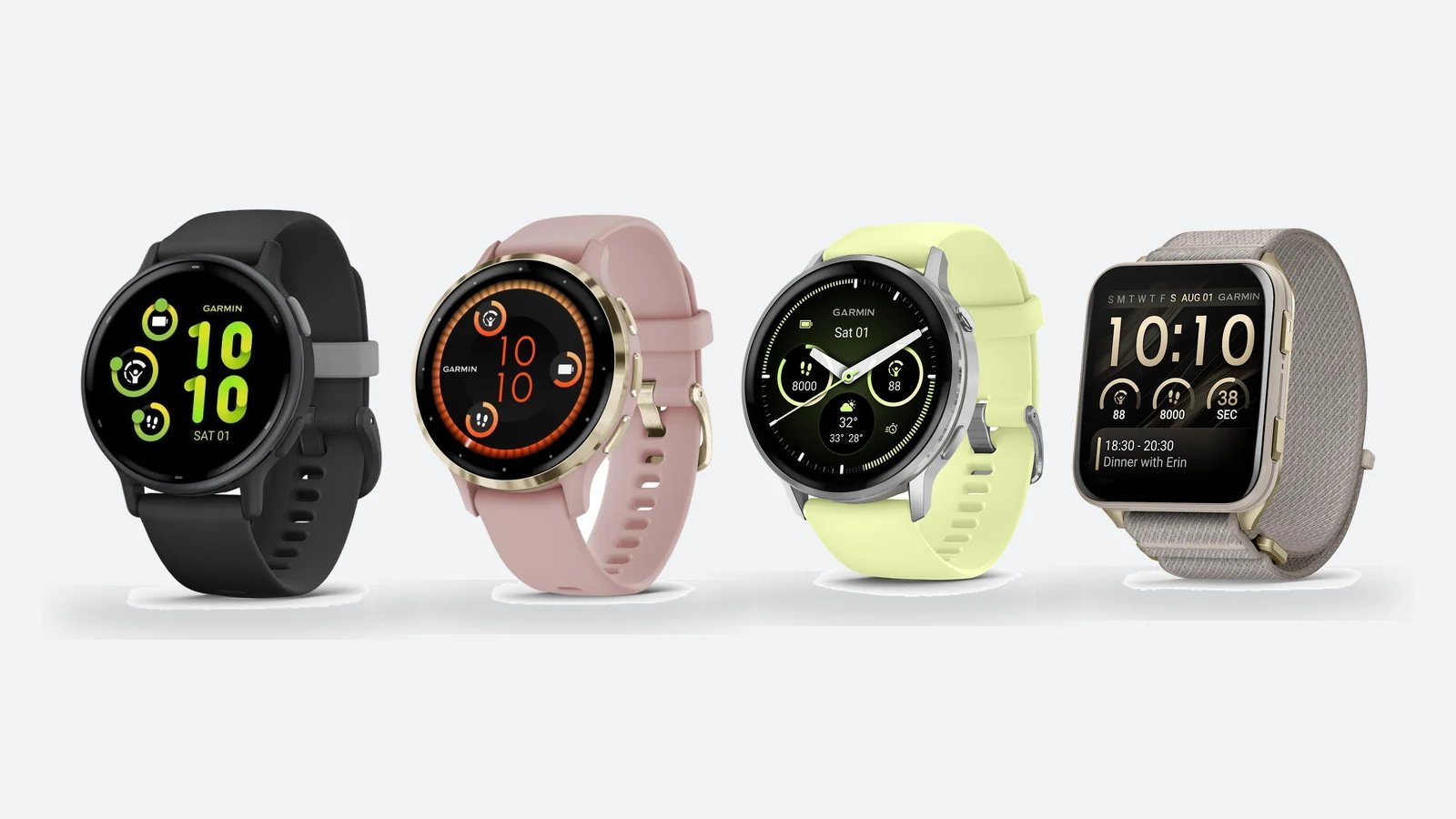
If you want a smartwatch that looks like a watch and does not need charging every night, look at these two series. Garmin's advantage over the Apple Watch and Galaxy Watch is the battery: 10–14 days on a charge means the watch tracks your sleep every night instead of sitting on a charger.
| Vivoactive 5 | Vivoactive 6 | Venu 3 / 3S | Venu 4 (45 mm) | Venu X1 | |
|---|---|---|---|---|---|
| Display | 1.2″ AMOLED | 1.2″ AMOLED | 1.4″ / 1.2″ AMOLED | 1.4″ AMOLED | 2″ AMOLED, rectangular |
| Battery as a smartwatch | up to 11 days | up to 11 days | up to 14 / 10 days | up to 12 days | up to 8 days |
| Calls from the wrist | no | no | yes | yes | yes |
| Flashlight | no | no | no | yes | yes |
| Barometric altimeter | no | no | yes | yes | yes |
| Maps | no | no | no | no | yes |
| Price level in Estonia | about 200–210 € | about 275–280 € | about 360–380 € | about 470 € | about 620–675 € |
The Vivoactive 5 is the most sensible first Garmin and a good gift for someone who is just starting to get active. The Vivoactive 6 adds a smart wake alarm, more storage for music and running dynamics. The Venu 3 is a step up in everyday convenience: you can answer a call on the watch, it detects naps and counts floors climbed. The Venu 3S is the same watch in a smaller 41 mm case for a slim wrist.
The Venu 4 brought a metal case, a built-in flashlight and multi-band GPS, but costs about 100 € more — choose it if you want the newer model and wear the watch with smarter clothes too. The Venu X1 stands apart: 7.9 mm thin, with a large rectangular display and maps, but the battery does not last as long as the others.
Instinct and Solar models: when battery and toughness matter
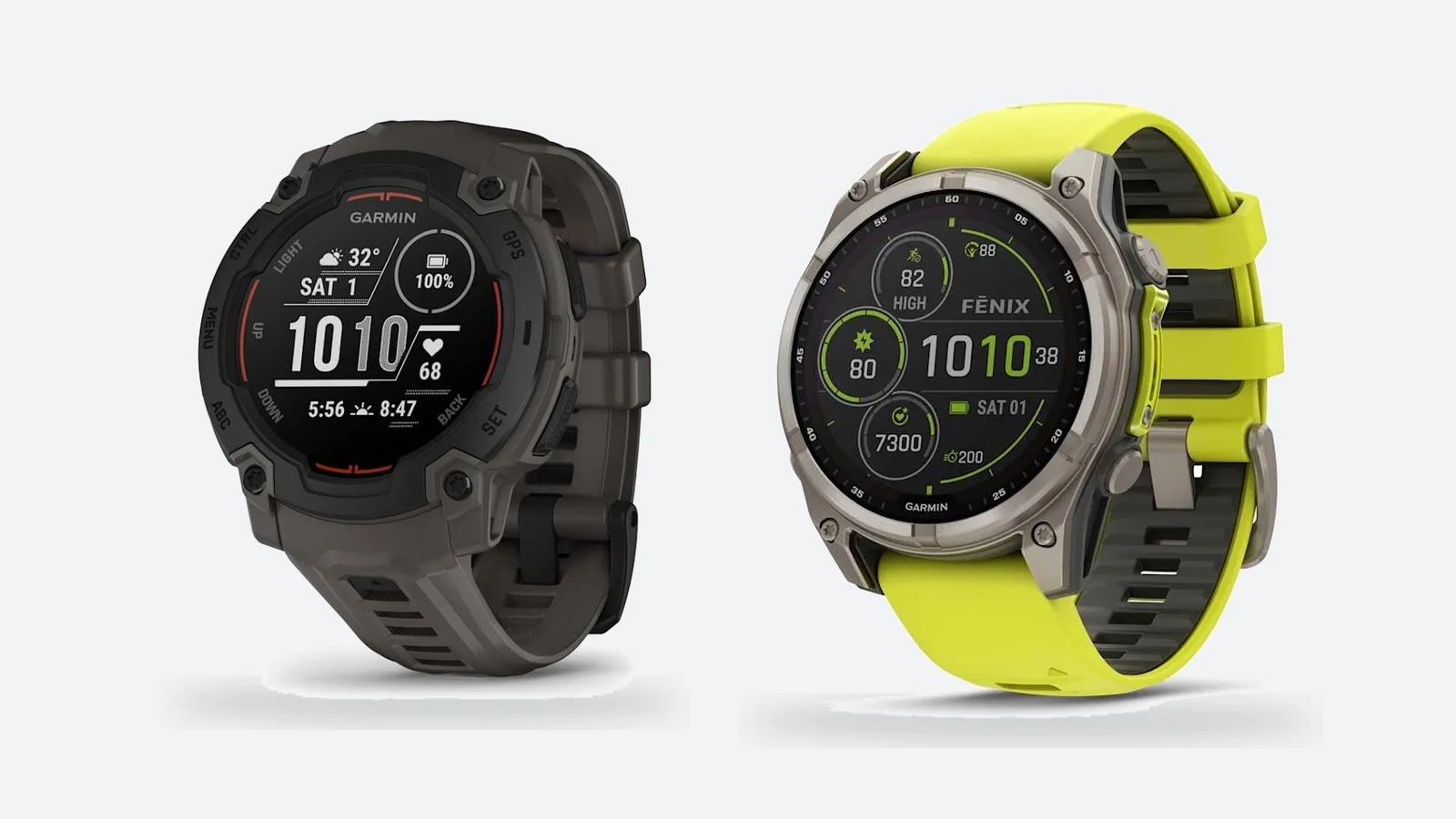
The Instinct is Garmin's simplest and toughest series: a reinforced polymer case, 10 ATM water resistance and testing to the MIL-STD-810 military standard. The Instinct E 45 mm lasts up to 16 days as a smartwatch and costs about 210 €. It is a good choice for a builder, a hunter or a child who is hard on a watch. The Instinct 3 adds a flashlight and multi-band GPS and comes with either an AMOLED display or solar charging; the 50 mm Solar version runs as a smartwatch without charging, given enough sunlight.
Do not count on solar charging in an Estonian winter: the extra days Garmin quotes assume about three hours of bright daylight a day. The real advantage of a Solar model at our latitude is the frugal MIP display, which is always on and clearly readable in the sun. The Fenix 8 Solar 47 mm lasts up to 21 days without any sun — five days longer than the AMOLED version of the same size.
AMOLED or MIP, sapphire or Gorilla Glass
An AMOLED display is bright, colourful and sharp — maps and training charts look clearly better on it. By default the display lights up when you turn your wrist; switch on always-on mode and battery life is roughly halved. A MIP display is dimmer and lower in resolution, but it is always on and reads even better in bright sunlight.
A sapphire lens resists scratches noticeably better than Gorilla Glass, and on the Fenix Sapphire versions it comes with a titanium bezel that makes the watch lighter. If you wear the watch every day at work where it can knock against metal or stone, sapphire is worth the extra. For the office and training, Gorilla Glass and a screen protector are enough.
A Garmin watch as a gift: what to check before you buy
- PhoneGarmin works with both Android and iPhone. Replying to messages from the watch is Android-only; notifications, calls and music work with both.
- Wrist sizeA 41–43 mm case suits a slim wrist (Venu 3S, Fenix 8 43 mm), 45–47 mm an average one. A 50–51 mm watch is large — choose it only if you know the recipient wants one.
- SportA Forerunner for a runner, a Fenix for a hiker or multisport athlete, a Venu or Vivoactive for the gym and everyday wear. All of them track swimming and cycling.
- Paying with the watchGarmin Pay works with cards from some banks only. Check on Garmin's website whether the recipient's bank is on the list.
- ReturnsA watch bought online comes with a 14-day right of withdrawal from the day the parcel is received. If you buy a gift early, remember the period runs from when the buyer receives it, not the person you give it to.
The price of a more expensive watch can be split into instalments: the exact monthly payment is shown under the price on every product page. We ship watches to parcel lockers (Omniva, DPD, Venipak) for 2.99 €, usually within 1–3 working days.
Verdict: which Garmin watch to buy
Choose a Fenix or Forerunner if…
- you train to a plan and want to see training readiness and recovery time
- you need maps on your wrist — hiking, trail running or in an unfamiliar city
- you want to charge the watch two or three times a month, not every week
- you dive, ski or go on multi-day trips (Fenix)
Choose a Venu or Vivoactive if…
- the watch is mainly for everyday wear and sleep tracking
- training means the gym, walking and a couple of runs a week
- you want a lighter, thinner watch that fits under a shirt cuff
- your budget is 200–400 € and you do not need maps on your wrist
Two models give the most watch for the money at the end of 2026. Since the fenix 9 arrived, the Fenix 8 costs 150–200 € less than the new flagship, with the same training features, maps and battery. The Forerunner 265 gives a runner, for about 370 €, the same training analysis as watches at twice the price.
The Vivoactive 5 is the one to pick as a first Garmin or a gift, the Venu 3 — or the Venu 3S for a slim wrist — as an everyday smartwatch. Buy the fenix 9 if you want the brightest display and the longest software support; the Instinct E if the watch has to survive work that breaks other watches.
Garmin watches in stock
Fenix, Forerunner, Venu, Vivoactive and Instinct. We ship watches to parcel lockers; the monthly instalment is shown on the product page.

Garmin Venu 3S smartwatch 41 mm, AMOLED, GPS, Gold/Ivory
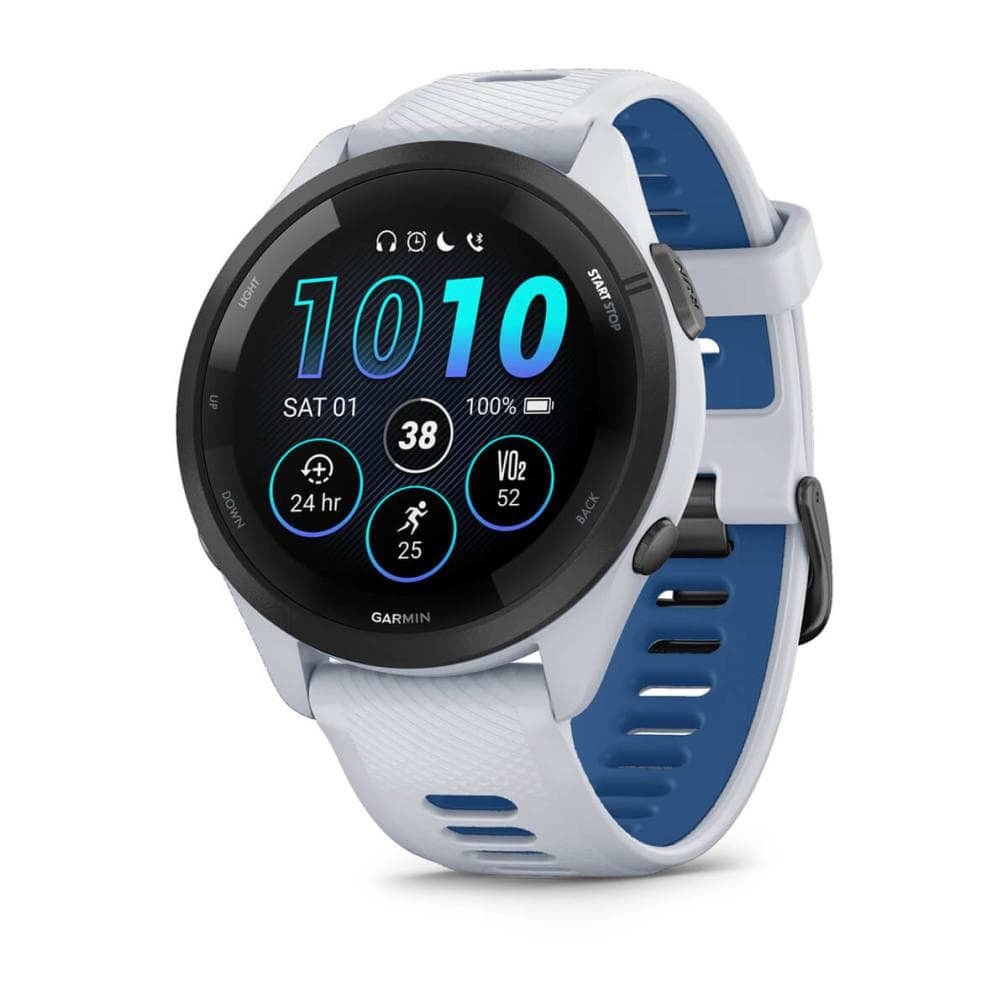
Garmin Forerunner 265 sports watch 46 mm, AMOLED, GPS, black/white

Garmin Forerunner 265 sports watch 46 mm, AMOLED, GPS, Aqua black/blue

Garmin Forerunner 965 smartwatch 47 mm, AMOLED, titanium, white

Garmin Venu 3 smartwatch 45 mm, AMOLED, GPS, silver/white

Garmin Venu 3 smartwatch 45 mm, AMOLED, GPS, black

Garmin Venu 3S smartwatch 41 mm, AMOLED, GPS, Gold/Grey

Garmin Venu 3S smartwatch 41 mm, AMOLED, GPS, Gold/Rose
Frequently asked questions about Garmin watches
Which Garmin watch is the best in 2026?
For most athletes the best choice is the Fenix 8: since the fenix 9 arrived it costs about 820–945 € in Estonia and offers maps, a flashlight and up to 29 days of battery. For runners the Forerunner 265 has the best balance of price and features (about 360–380 €), the Venu 3 is best for everyday wear, and the Vivoactive 5 is the best first Garmin (about 200–210 €).
Should I buy the Fenix 8 or the fenix 9?
The fenix 9 has a display twice as bright, 64 GB of storage (32 GB on the Fenix 8) and a sapphire lens on every version. Battery, maps, flashlight and training features are the same. If those three differences do not matter to you, the Fenix 8 is the more sensible buy — the price gap in Estonia is 150–200 €.
What is the difference between Venu and Vivoactive?
The Venu 3 has a speaker and microphone for calls, a barometric altimeter, a larger display (on the 45 mm model) and a longer battery — up to 14 days. The Vivoactive is simpler and about 150 € cheaper: GPS, heart rate, sleep and sport modes are all there, but you cannot make calls from the watch.
Do Garmin watches work with iPhone?
Yes. Every Garmin watch connects through the Garmin Connect app to both iPhone and Android. The one notable difference: replying to messages from the watch works with Android phones only.
Do I have to pay for Garmin Connect?
No. The Garmin Connect app with all your health and training data is free. Garmin also offers a paid Connect+ add-on, but the watch's core features do not depend on it.
How long does a Garmin watch battery last?
In smartwatch mode: Vivoactive 5 and 6 up to 11 days, Forerunner 265 up to 13, Venu 3 up to 14, Forerunner 965 up to 23, and Fenix 8 and fenix 9 up to 10, 16 or 29 days depending on case size. The always-on display roughly halves that, and GPS training drains the battery in hours.
Can I pay with a Garmin watch in Estonia?
Garmin Pay contactless payments are available on most models (Vivoactive, Venu, Forerunner 265 and newer, Fenix), but only with cards from supported banks. Check the list on Garmin's website for your bank before you buy.
Can a watch bought as a gift be returned?
Yes. Goods bought online come with a 14-day right of withdrawal from the day the parcel is received. The watch must be unused and in its original packaging. If you buy a gift early, remember the period starts when you receive it, not when the gift is handed over.
Watch, strap and screen protector in one go
It is worth adding a screen protector and a spare strap to the watch straight away — nylon for training, leather or metal for the office. All Garmin watches are on one page, with filters for case size and display.
Browse Garmin watchesⓘ Price level: median of Estonian shop offers on hinnavaatlus.ee on 11 November 2026, rounded; list prices from Garmin. The current price is on the product page. Battery life is the manufacturer's maximum for smartwatch mode. Health metrics are not a medical diagnosis. Photos: Garmin product images.